Weekly Picks
Geek of the Week
Alex Nogales - November 13, 2011

Alex Nogales is the president and CEO of the National Hispanic Media Coalition, media advocacy and civil rights organization created to advance American Latino employment and programming equity throughout the entertainment industry and to advocate for telecommunications policies that benefit Latinos and other people of color. Nogales has led boycotts, filed over 50 petitions, and led demonstrations against prominent media companies for a lack of employment diversity. Nogales is currently engaged in evaluating the diversity practices of four major networks and pursuing diversity initiatives in public policy.
Julissa Marenco is the president of ZGS Communications Group, a Hispanic-owned media company that owns and operates the largest group of Telemundo affiliate television stations. In this capacity, Marenco oversees management of 13 Telemundo television stations and three radio stations nationwide. Prior to her work with ZGS, Marenco was appointed as a White House Fellow and selected to serve as Special Assistant to the Administrator of the Environmental Protection Agency. Marenco is on the boards of several organizations, including the National Association of Broadcasters Education Foundation and the Children’s National Medical Center Public Policy. This year, Marenco was nominated to the American Council of Young Political Leaders and recognized on the Alliance for Women in Media’s Sixty@60 list of inspiring women in management, production, and programming in all forms of media. In addition to her current work with ZGS Communications, Marenco teaches at Howard University’s Media Sales Institute.
Robert Mendez is the Senior Vice President of Diversity at Disney | ABC Television Group. In this position, Mendez’s responsibilities include advancing diversity strategies for the various properties within Disney_ABC Television Group and acting as the key liaison on diversity matters with government officials, the creative community, and advocacy groups. Prior to his role at Disney | ABC Television Group, Mendez was the SVP of business and legal affairs for Buena Vista Television, where he managed domestic distribution of The Walt Disney Company’s other television products on various platforms, such as pay-per-view, pay cable, and the Internet. Mendez is a member of the FCC’s recently re-chartered Federal Advisory Committee on Diversity for Communications in the Digital Age.
Deborah Lathen is an attorney, business leader, and national policy advisor. Lathen was appointed chief of the Cable Services Bureau at the Federal Communications Commission in 1998. During her tenure with the Commission, Lathen presided over some of the most significant proceedings in the telecommunications industry. Prior to her work with the FCC, Lathen spent eight years at Nissan Motor Corporation as director of national consumer affairs. Lathen was instrumental in establishing the Nissan Foundation, an organization that supports educational programs that celebrate and foster appreciation and understanding of diverse cultural heritage. Lathen is on the Minority Media and Telecommunications Council’s Board of Directors and served as the organization’s vice chair.
A. John Shoraka is the regional administrator of Region III for the Small Business Administration, appointed by President Obama in 2010. In this role, Shoraka is responsible for the delivery and management of the SBA’s small business programs and business development program initiatives. Prior to his appointment to the SBA, Shoraka was vice president at The Aries Group, a business and financial consulting firm based in Silver Spring, MD. Shoraka has also served as chair of the Small Business Association for International Contractors and as an adjunct faculty member at Catholic University of America.
Shirley Sneve is the Executive Director of Native American Public Telecommunications at Native American Public Telecommunications, or NAPT. NAPT’s mission is to share Native stories with the world by supporting the creation, promotion, and distribution of Native media. A member of the Rosebud Sioux Tribe, Sneve helped found the Northern Plains Tribal Arts Juried Show and Market, the Oyate Trail cultural tourism byway, and the Alliance of Tribal Tourism Advocates. Prior to her work with NAPT, Sneve worked for the Washington Pavilion of Arts and Science Visual Arts, the South Dakota Arts Council, and South Dakota Public Broadcasting. She currently serves on the board of the Working Films and Arts Extension Institute and is an adjunct professor at Augustana College and the University of Sioux Falls..
Linda Gooden is the executive vice president of the Information Systems & Global Solutions, or IS&GS, business area at Lockheed Martin. IS&GS generated nearly $10 billion in sales in 2010 and includes over 30,000 professionals who provide IT solutions, systems, and services to support worldwide missions for civil, defense, intelligence, and other government customers. Gooden is a member of several boards, including the Armed Forces Communications and Electronics Association International, the University Systems of Maryland Board of Regents, and Automatic Data Processing, Inc. Gooden was appointed to the National Security Telecommunications Advisory Committee by President Obama in 2010.
Leah Culver is a Web developer and blogger responsible for the creation of several sites. Currently, Culver is co-founder and CEO of Convore, a real-time group chat application. Prior to this project, Culver was the founder and lead developer of Pownce, a social networking site that allowed users to easily share and exchange large media files, until it was acquired by Six Apart in 2008. Culver has also created the Baconfile Web interface, the Hurl HTTP client, and an iPhone application for Plancast, a social networking site that focuses on sharing events and plans with other users. Culver is passionate about open source, APIs, and the Django web framework, and promotes them all on her blog.
Geoffrey Blackwell is the Director of Strategic Relations and Minority Business Development at Chickasaw Nation Industries, Inc. In this role, Blackwell evaluates and maximizes economic development opportunities with private sector companies, federal agencies, Tribal nations and entities, and small, minority, women-owned, and disadvantaged businesses. Prior to his work with CNI, Blackwell worked with the FCC as a senior attorney within the Office of Intergovernmental Affairs of the Consumer & Governmental Affairs Bureau and as the liaison to tribal governments, coordinating with various sectors of the communications industries. Last year, FCC Chairman Julius Genachowski appointed Blackwell to head new initiatives on Native American Affairs and lead the FCC’s efforts to work with Native Nations and carry out the National Broadband Plan’s recommendations for bringing broadband to all Native communities. Throughout his career, Blackwell has assisted Commission staff on matters involving wireline, wireless, satellite, and broadcast services. He has also served as a member of the FCC’s Federal Advisory Committee on Diversity.
Jenny Alonzo is a media consultant with over two decades of experience in the broadcast, cable, and telecom industries. Alonzo has worked as Coordinator of On-Air Promotions at NBC-Universal; Senior Vice President of Production, Promotion, Planning, and Multicultural Strategies at Lifetime Television Networks; and Chair of the National Association for Multi-ethnicity in Communications. Most recently, Alonzo served as a member of the FCC Advisory Committee on Diversity and Nielsen Media’s Latino Advisory Council. She has received several honors and awards, including LISTA’s Executive of the Year.
Darnell Washington - September 4, 2011
Darnell Washington is a broadcast industry veteran with over 28 years of experience. Currently, Washington is president and CEO of New Moon Communications, a company he founded that recently purchased four LPTV stations that he plans to convert into network affiliates. Washington’s goals for the company include building a group of five to ten television stations and having them perform at premium profit margins of 25 to 30 percent over the next five to ten years. Washington has built his career from the ground-up, starting as a film projectionist and working his way through production, sales, and management with several companies, including Clear Channel, Pulitzer Broadcasting, and Allbritton Communications. MMTC is incubating New Moon.
Sue Gardner is the Executive Director of the Wikimedia Foundation, a nonprofit charitable organization dedicated to encouraging the growth, development and distribution of free, multilingual content, and to providing the full content of these wiki-based projects to the public free of charge. The organization hosts Web sites known as the “Wikimedia projects,” including Wikipedia, Wikinews, and Meta-Wiki. Prior to her work with Wikimedia, Gardner was CBC.ca, the English-language site of the Canadian Broadcasting Corporation. The site more than doubled its audience and won several awards under her leadership. Gardner is a member of the Online News Association, the Society for News Design, Women in Film and Television, the Canadian Association of Journalists, and Canadian Women in Communications.
Robert Greene is a principal at SYNCOM Venture Partners, a venture capital investment firm that focuses in the media and communications industries. At SYNCOM, Greene heads the business development and investor relations processes. In addition to this work, Greene serves as chairman of the audit and compliance committee for the Virginia Retirement System. He has also served as president of the National Association of Investment Companies and the Marathon Club for Entrepreneurship.
Anthony Brown is Vice President of Major Accounts at Telamon Corporation, a company that provides several services in areas that include network infrastructure, integration distribution, business transaction management, industrial manufacturing, and green energy solutions. Brown’s role as VP of Major Accounts involves managing relationships with large service providers and major equipment manufacturers, in addition to developing marketing strategies, implementing new technologies, and driving new revenue streams. Including his 15 years with Telamon, Brown has worked in the telecommunications industry for 25 years.

Dean Garfield is the President and CEO of the Information Technology Industry Council (ITI), the premier voice, advocate, and thought leader for the information and communications technology industry. As president, Garfield believes in building public-private sector partnerships to cultivate the world’s best and brightest workforce, and preserving our nation’s global competitiveness for the next generation of Americans. Prior to his work with ITI, Garfield served as executive vice president and chief strategic officer for the Motion Picture Association of America and the vice president of legal affairs at the Recording Industry Association of America. Garfield is a board member of the SEED School of Washington, DC.

James Cicconi is the Senior Executive Vice President of External and Legislative Affairs at AT&T. Cicconi also serves as the chair of the AT&T Foundation, the philanthropic arm of the corporation that provides grants that improve education and advance community engagement. Prior to these roles, Cicconi served as General Counsel and Executive Vice President for Law and Government Affairs with the company. He is a director at El Paso Electric Company and the U.S. Chamber of Commerce, and is a member of the USTelecom Association Executive Committee.
Aneesh Chopra is the United States Chief Technology Officer, serving as an assistant to the President and associate director for technology within the Office of Science and technology Policy. In this role, Chopra has worked to advance the nation’s goals as they relate to the technology agenda, including job creation, reducing health care costs, and homeland security. Prior to his appointment in 2009, Chopra was secretary of technology for the Commonwealth of Virginia. He has also served as managing director with the Advisory Board Company, a healthcare think tank. In 2008, Government Technology magazine ranked Chopra in their Top 25 “Doers, Dreamers, and Drivers.”
Dennis Hightower is the Deputy Secretary at the Department of Commerce, promoting improved standards of living for Americans in areas that include technology, statistical research, and entrepreneurship. Prior to his appointment as Deputy Secretary, Hightower was chief executive officer of Europe Online Networks S.A., a satellite-delivered broadband interactive entertainment company based in Luxembourg. Hightower also spent nine years with the Walt Disney Company, where he led multi-billion dollar enterprises as president of Walt Disney Television & Telecommunications. Hightower has served on several Boards of Directors, including that of Lightfleet, a high technology company.
Dr. Irving Pressley McPhail is the president and CEO of the National Action Council for Minorities in Engineering, or NACME, an organization dedicated to building the overall number of underrepresented minority engineering graduates. Prior to his current position, Dr. McPhail served as Executive Vice President and Chief Operating Officer of the organization. From 1998-2005, Dr. McPhail served as Chancellor of The Community College of Baltimore County, during which he reorganized three separate community colleges into a single, multi-campus, public college. Dr. McPhail is on the boards of National Council on Black American Affairs/Northeast Region and the Society of Manufacturing Engineers Education Foundation, and he is a founding member of the National Engineers Week Foundation Diversity Council.
Rodney Akins is the senior vice president of IBM’s Systems and Technology Group, the most recent of many roles in nearly 30 years with the company. Other roles included running the Desktop and UNIX Systems businesses and acting as general manager of Pervasive Computing, Software Group. Adkins is also a member of the IBM Operating Team and the Board of Governors for the IBM Academy of Technology. Under his leadership, IBM has developed some of the assets that are part of IBM’s Smarter Planet portfolio today. Adkins is a member of the National Academy of Engineering, the Executive Leadership Council, and the National Society of Black Engineers. Fortune magazine named him one of the 50 Most Powerful Black Executives in America in 2002.
Gerald Lawson was a visionary and pioneer in electronic entertainment. A largely self-taught engineer, Lawson worked as director of engineering and marketing for Fairchild Semiconductor in the mid-1970s. Under his leadership, the division created the first home video game system that allowed users to play games on removable cartridges, an innovation that defines gaming to this day. Fairchild has also worked for Atari and invented an early coin-operated arcade game called Demolition Derby. He was a member of the Homebrew Computer Club, which had many Silicon Valley innovators in its membership, including Steve Jobs, co-founder and CEO of Apple. Lawson left us earlier this year, but his spirit will continue to inspire anyone who wants to beat the odds and make a difference in the world of technology. His legacy will be with us forever.
Maureen Lewis is the Director of the Minority Telecommunications Development Program at the National Telecommunications and Information Administration (NTIA), a osition she has held since January of 2000. As the director of the program, Lewis is responsible for developing policy and analyzing proposed legislation and regulations to increase mpinority ownership of broadcast and telecommunications enterprises. In addition, Lewis serves as a senior policy analyst and advises on such issues as media, broadband deployment, federal rights-of-way, Internet domain names, and small business development. Prior to her work with the NTIA, Lewis served as general counsel of the Alliance for Public Technology, where she successfully petitioned the Federal Communications Commission to initiate a proceeding to evaluate the pace of broadband deployment in the United States. Lewis has also served as senior counsel for Howard University, where she represented the university’s radio, television, and publishing operations.
Ruth Milkman has a long career - both behind her and ahead of her - in the field of broadband policy. In 2009, FCC Chairman Julius Genachowski appointed her Chief of the Commission’s Wireless Telecommunications Bureau. The Commission announced last week that Milkman will be stepping down from the position to become Special Counsel to the Chairman for Innovation in Government. In this position, Milkman will lead a team to develop proposals for procedural, regulatory and statutory changes to further innovation. In addition to these roles, Milkman has worked at the Commission as Deputy Chief of the International and Common Carrier Bureaus and Senior Legal Advisor to Chairman Reed Hundt, among other positiona. Milkman was a founding partner of Lawler, Metzger, Milkman & Keeney, LLC, and is well recognized as an expert in all aspects of telecommunications law.
Phil Weiser is a longtime servant of the nation in the formation of telecommunications and broadband policy. Weiser has testified before both houses of Congress, served as the lead agency reviewer for the Federal Trade Commission as part of the 2008 Presidential Transition, served as senior counsel to the Assistant Attorney General in charge of the Antitrust Division at the United States Department of Justice, served as a law clerk to Justices Byron R. White and Ruth Bader Ginsburg at the United States Supreme Court and to Judge David Ebel at the Tenth Circuit Court of Appeals, and co-authored two books on telecommunications policy. Currently, Weiser is a professor of law and telecommunications at the University of Colorado, where he has founded the Journal on Telecommunications & High Technology Law and the Silicon Flatirons Center for Law, Technology, and Entrepreneurship. This July, Weiser will officially become the Dean of the CU Law School and become Executive Director at Silicon Flatirons.
Pamela Jones Harbour is a former FTC Commissioner who is well recognized for her knowledge of evolving areas of competition and consumer protection law, including privacy and data security issues, topics that have recently been of extreme concern. Harbour has been internationally recognized for her leadership and strong stance on these issues: in 2010, Harbour received the Electronic Privacy Information Center’s Champion of Freedom Award; she represented U.S. interests during negotiation and future implementation of a global privacy framework related to cross-border data transfers; and has spoken strongly on such subjects as technological standard setting and innovation markets. Harbour is currently a partner in Fulbright & Jaworski L.L.P.’s antitrust and competition practice and on the board of the Center for Democracy & Technology.
Rebecca Arbogast is the Managing Director of Stifel Financial, a regional brokerage and investment banking firm. With the company, Arbogast focuses on legal and regulatory issues affecting communications industries, including spectrum, wireless, intellectual property, and antitrust issues. Prior to her work with Stifel, Arbogast was chief of the International Bureau Telecommunications Division of the FCC, where she represented the FCC’s domestic communications policies in international meetings, provided technical and strategic advice on communications trade issues, and shaped the agency’s policies for international communications services. Arbogast has previously served in the Office of the Legal Counsel of the Department of Justice, where she advised the White House, Attorney General and Executive Branch Agencies. Arbogast is an advisor to the Congressional Internet Caucus and teaches Global Communications and Constitutional Law at American University and Johns Hopkins School of Public Policy.
A Mexican native, Dr. Hector Ruiz is the Chairman and CEO of Advanced Nanotechnology Solutions, Inc, a research and development laboratory company. Prior to his work with Advanced Nanotechnology Solutions, Dr. Ruiz was the Chairman and CEO of Advanced Micro Devices (AMD), Inc, a semiconductor designer. He has also served as President of Motorola’s Semiconductor Products Sector. Dr. Ruiz is a board member of venture development organization EDCO Ventures, was appointed to the President’s Council of Advisors on Science and Technology in 2006, and has served on the National Security Telecommunications Advisory Committee.
Grace Agnew is the Associate University Librarian for Digital Library Systems at Rutgers University Libraries and the creator and principal investigator for the Video Mosaic Collaborative, a program funded through the National Science Foundation. She is also the principal architect behind the New Jersey Highway, a Web site that provides users with access to New Jersey history and culture from the collections of New Jersey libraries, museums, archives, and historical societies. Agnew has written several articles on metadata, digital video, and digital rights management; written a book on digital rights management; and co-authored a book on metadata. Agnew has previously worked as a Consultant at the Library of Congress and a Collaborator at the Open Library Environment Design Project. She is a member of the Advisory Committee to the Congressional Internet Caucus.
Maria G. Arias was recently appointed by Comcast as the Executive Director of Diversity and Inclusion. In the position, Arias will fulfill the role of directing, managing, and organizing Comcast’s diversity program strategy. Prior to her new appointment, Arias was Vice President of Operations for Comcast Cable’s Southern Colorado systems. Arias has also held government affairs roles with Adelphia Communications and AT&T Broadband, as well as positions with AT&T as regulatory counsel. Arias is a board member of Solera National Bank and the Junior Achievement Board of Southern Colorado. She has also served on the Hispanic Chamber of Commerce, the National Association of Multicultural Ethnicities in Communications, and the Cherry Creek Schools Foundation. CableFax magazine named Arias one of the “100 Most Influential Minorities in Cable” last year.
Jose Marquez-Leon is the Founder, President, and CEO of LISTA, the Latinos in Information Sciences and Technology Association, an organization dedicated to supporting Latinos who work in the science, mathematics, information sciences, new media, telecommunications, and technology sector. Prior to founding LISTA, Marquez-Leon founded Hispanics in Information Technology and Telecommunications (HITT), was Vice President of Strategic Channels for Mi8 Corporation and President of JAM III Communications Group, and has held senior positions at major telecom companies, including Sprint, MCI, and AT&T. He has been named the Hispanic Trends Magazine Technology Trendsetter of 2007, one of CCG Hispanic Engineer Magazine’s 100 Most Influential Hispanics in Technology and Business from 2006 to 2008, and the Greater New York Chamber of Commerce Advocate of the Year in 2003, among several other awards and accolades.
James Assey is the Executive Vice President at the National Cable and Telecommunications Association (NCTA), involved in all aspects of NCTA’s work on behalf of the cable industry. Assey was a long-term staff member on the U.S. Senate Committee on Commerce, Science and Transportation. He has been the Senior Democratic Counsel on Communications and Media Issues and was most recently the Senior Democratic Counsel to the Committee. He has worked as a Communications Associate and Law Clerk in both the public and private sectors.
Dr. Jill Pipher is President of the Association for Women in Mathematics (AWM), an organization dedicated to encouraging women and girls to study and have active careers in mathematics, as well as promoting equal opportunity and treatment for women and girls in the mathematical sciences. In addition to her roles as president of AWM and a professor of mathematics at Brown University, Dr. Pipher is also the first director of the Institute for Computational and Experimental Research in Mathematics, a National Science Foundation-funded mathematics institute. Dr. Pipher’s work has focused on harmonic analysis, Fourier analysis, partial differential equations, and cryptography; she has published over thirty research articles and coauthored a textbook on cryptography.
Anna Gomez is the Deputy Assistant Secretary for Communications and Information and Deputy Administrator at the National Telecommunications and Information Administration (NTIA). She played an integral role in preparing America for the digital transition in 2009. Gomez has worked in both the public and private sectors with previous employers that include Nextel and the FCC. During her several years with the FCC, she held several positions, including Chief of the Network Services Division and Senior Legal Advisor to former Chairman Bill Kennard.
Richard Adler, Vice-President for Research & Development at Civic Ventures, has been a nationally recognized leader in the fields of technology and aging for more than a decade. Adler served as a director at the Institute for the Future (IFTF), where he led a research program in new information services. At IFTF, he was a pioneer in anticipating and exploring the implications of the emergence of computer-based online services as a mass medium. From 1990 to 1997, Adler was Vice President for Development at SeniorNet, a national non-profit organization whose mission is to provide adults aged 55 and older with access to computer and telecommunication skills. At SeniorNet, Adler conducted the first national survey of computer use by older adults, launched the organization’s first Web site, and developed and directed an award-winning project that enabled older adults to participate in online discussions of important national issues. Thereafter, Adler was principal of People & Technology, an independent consulting firm that focused on developing strategies for new markets and new products. Adler is currently a member of the Congressional Internet Caucus.
Dr. Andrew Williams is Chair and Associate Professor of the Department of Computer and Information Sciences at Spelman College, as well as the Director of its Humanoid Engineering and Robot Systems Lab. With a Doctor of Philosophy in Electrical Engineering, Dr. Williams researches and teaches about artificial intelligence, autonomous agents and multi-agent systems, multi-robot teams, and humanoid robotics. He is the Founder and Coach of Spelman’s Spelbots Robotics Team, which has competed in International Robotics Competitions in Japan, Germany, and the Mediterranean. Dr. Williams is also the founding Principal Investigator and Director for the ARTSI Alliance, an NSF Sponsored Program for spreading robotics to students and faculty at HBCUs. He has written a book called Out of the Box: Building Robots, Transforming Lives.
Charlie Firestone is the Executive Director of the Aspen Institute’s Communications and Society Program, which was created to promote integrated, thoughtful, values-based decision making in the fields of communications, media, and information policy. Firestone has held the position for over two decades and led the Program toward a focus on the development of new communications policy models and options for the public interest. Prior to his role at the Aspen Institute, Firestone was director of the Communications Law Program at UCLA and president of the Los Angeles Board of Telecommunications Commissioners. Throughout his career, he has written many articles on communications law and policy.
Dr. Wilhemina Leigh is a Senior Research Associate for the Joint Center for Political and Economic Studies, her latest step in a long career in areas such as housing policy, health policy, income security, and labor market issues. She has previously worked at the Congressional Budget Office, Bureau of Labor Statistics, Department of Housing and Rural Development, Urban Institute, and National Urban League Research Department. With the Joint Center, Dr. Leigh performs policy research on access to care, health, reproductive health, and child health disparities. She has also analyzed asset building programs, the Social Security system, and soft skills programs.
Lavonda Reed-Huff, a professor at the Syracuse University College of Law, teaches and conducts research in the areas of wills and trusts, property, and communications law. Reed-Huff has published many law review articles and scholarly works addressing broadcast ownership, political broadcast advertisements, and placement of satellite dishes and clean energy devices. She has also taught at the Louis D. Brandeis School of Law at the University of Louisville and was a lawyer at the international law firm of Paul, Hastings, Janofsky & Walker LLP, where she practiced telecommunications and corporate law.
Carolyn Brandon is the Senior Industry and Innovation Scholar at the Georgetown Center for Business and Public Policy and a member of the Advisory Committee to the Congressional Internet Caucus. Formerly the Vice President of Policy at CTIA-The Wireless Association, Brandon was responsible for the development of strategic national policies that further the goals of the commercial wireless industry. She has also served on the Advisory Board of the TechPolicy Summit, represented the wireless industry on the FCC’s Consumer Advisory Committee, and was voted one of the “Top Ten Women in Wireless in 2008″ by the publishers of Wireless Week. Brandon is currently serving her second term on the Steering Committee of the District of Columbia Bar Association’s Computer and Telecommunications Committee.
Rayford Wilkins, Jr. is the CEO of AT&T Diversified Businesses, handling international investments, advertising and publishing, and the consumer wireless initiative in India. Prior to joining AT&T, Wilkins was the group President and CEO of SBC Enterprise Business Services, overseeing sales, data solutions engineering, and operations of the advanced data and IP networks. Wilkins has over 35 years of experience in the industry, beginning at Southwestern Bell Telephone. Wilkins is on the boards of Teléfonos de México, América Móvil, and the National Urban League, and also a member of the Advisory Council of the McCombs School of Business at the University of Texas at Austin and the Executive Leadership Council. Savoy magazine has named him as one of the “2010 Top 100 Most Influential Blacks in Corporate America.”
If you’ve heard Dr. Nicol Turner-Lee speak, you know first-hand the power of her voice, both in tone and in its ability to incite others to action. Dr. Turner-Lee has amplified that voice through her work as the Director of the Media and Technology Institute for the Joint Center for Political and Economic Studies, one of the nation’s leading research and public policy institutions and the only one whose work focuses primarily on issues of particular concern to African Americans and other people of color. Working for the Joint Center, Dr. Turner-Lee has collaborated with three others to publish an encompassing study on “National Minority Broadband Adoption: Comparative Trends in Adoption, Acceptance and Use.” Prior to her work with the Joint Center, Dr. Turner-Lee was an executive at One Economy.
This Geek is also a pioneer - he is one of the Founders of the area of California we know as Silicon Valley. Clay was inducted into the Silicon Valley Engineering Council’s Hall of Fame for his role as a key figure in its development. Clay has worked since the 1970s with startup companies such as Tandem Computers, Compaq, Intel Corporation, and Hewlett Packard, becoming a key figure in HP’s computer divisions. Today, Clay is CEO of ROD-L Electronics, the world leader in electrical safety testing equipment. Clay has worked tirelessly for over 35 years in Silicon Valley in leadership positions and in numerous community organizations to promote the improvement in quality of life.
Dr. Lonnie Johnson, through the many accomplishments he has had in his life, is a living testament to the power every person has – African American or otherwise – if they strive to accomplish anything they desire. Although he is most well-known for inventing the super soaker, Dr. Johnson has a strong background as a research engineer and inventor. He has worked in both the public and private sectors, developing more efficient cooling systems, working on the stealth bomber, and developing an innovative heat pump that circulated water instead of expensive and environmentally unfriendly Freon. Recently, Dr. Johnson has developed a lithium-air battery for electric cars that can allow them to go over 1,000 miles on a single charge. Impressed? That’s not all – Dr. Johnson holds over 80 patents with 20 applications, was inducted into the Inventor Hall of Fame in 2000, and he isn’t finished yet. His company, Johnson Research and Development Co., Inc., continues to innovate, creating improved radon detectors, heat pumps and lithium battery products as well as new toy concepts.
Jill Olkoski is a technology expert who has taken her skills online. With a degree in Mechanical Engineering, she worked for Motorola for 17 years, eventually working her way up to become Director of Quality for her division. Seeking a better understanding of software development, Olkoski obtained another degree in Computer Science. Eventually, Olkoski developed a small web design company, designing websites for small businesses, using her technical, project management, and interpersonal skills A portfolio of her designs can be found at her website.
Jennifer Kyrnin is an inspirational Geek of the Week. Not only has she been a professional Web developer since 1995, she has spent almost two decades helping others learn Web Design, HTML, CSS, and XML. Kyrnin has a personal page on About.com with introductions to learning the programs that Web Developers use, including tutorial videos. As a Web developer, she has maintained sites of over 5,000 pages, from large corporate websites to small personal pages and blogs. Kyrnin is also a former Peace Corps volunteer. Kyrnin’s work and independent learning websites have definitely helped us get a little closer to closing the digital divide.
Brenda Lloyd is a very talented and accomplished Geek. A graduate of The Art Institute of New York City, Lloyd created Mireku Studios, an interactive media agency that uses a team of designers, programmers, and creative directors to create anything their clients need, from graphic design to Flash animation and video production. Lloyd has had some big projects under her belt, including work as the lead designer for the billion dollar New Jersey Performing Arts Center.
Ory Okolloh is the Founder and Executive Director of Ushahidi, a, organization that “builds tools for democratizing information, increasing transparency and lowering the barriers for individuals to share their stories” by developing free and open source software for information collection, visualization and interactive mapping. Last year, Okollah won the Knight News Challenge – she created a platform for crowdsourcing crisis information through a free web map and timeline that journalists and citizens can use to contribute multiple reports of large news events. A graduate of Harvard Law School, Okolloh is a blogger at Kenyan Pundit, co-founder of the website Mzalendo, and was previously a Chayes Fellow at the World Bank’s Department of Institutional Integrity.
Dr. Song, an Associate Professor in the department of Electrical Engineering and Computer Science at University of California, Berkeley, is the author of more than 60 research papers in areas ranging from software security, networking security, database security, distributed systems security, to applied cryptography. Dr. Song has served on the FCC’s Technological Advisory Committee, ACM Computer and Communication Security Symposium Committee, and Symposium on Operating Systems Design and Implementation committee. Dr. Song has also received several awards, including the NSF CAREER Award, the Li Ka Shing Foundation Women in Science Distinguished Lecture Series Award, and the MIT Technology Review TR-35 Award, which recognized her as one of the world’s top innovators under the age of 35.
Jesse Russell is one of those people who will be remembered in history – the holder of over 75 (that’s seventy-five!) unique patents, he has been recognized as the father of digital cellular technology, and deservedly so: He is responsible for many of the innovations found in the world’s wireless infrastructure. He has been inducted into the National Academy of Engineering, was elected as a Fellow in the International Engineering Consortium for his contributions in the development of Broadband Communications Access Technologies, and was the US Black Engineer of the Year for best Technical Contributions in Digital Cellular and Microcellular Technology – to name just a few of his many acknowledgments and awards. Currently, Russell is the CEO of incNETWORKS, Inc., and a member of several telecommunications and technology boards, including the FCC’s prestigious Technological Advisory Council.

Dr. Ho, currently an employee at Sandia National Laboratories, investigates ways to capture and store solar energy for utility-scale electricity production using concentration solar power, working closely with the Department of Energy to improve the performance and lower the costs of solar energy systems. Since 2008, Ho has been the principal investigator in a group that investigates ways to capture and store solar energy for utility-scale electricity production using concentrating solar power. A former member of the FCC’s Technological Advisory Council, Dr. Ho received the Asian American Engineer Award this year for his work.
This Geek has a lot of experience under his belt – in addition to creating over 70 inventions and holding 20 patents, Dr. Yung is the Executive Vice President and Chief Technology Officer of Tessera, a company that invests in, licenses, and delivers innovative miniaturization technologies that transform next-generation electronic devices. Dr. Yung has also been a CTO with Intel and Sun Microsystems. He is a board member of the US-China Green Energy Council, a founder of the World Economic Forum’s New Asian Leaders, and Adjunct Professor at the City University of Hong Kong. Dr. Yung has also published over 50 technical articles in journals and conferences.
This Geek of the Week has really lived up to her surname. Warrior has been featured on Fortune Magazine’s Most Powerful Women list, ranked as the 11th most influential global Indian by the Economic Times, and had her achievements recognized by the American Immigration Law Foundation. Those achievements? She was the Chief Technology Officer at Motorola’s Semiconductor Products Sector, eventually rising to become CTO of the entire company – the first female to hold any executive position at Motorola. Eventually, she moved on to become CTO at Cisco Systems. In addition to her work at Cisco, Warrior holds several directorships, sitting on a range of boards that include Chicago’s Museum of Science and Industry; the Singapore Agency for Science, Technology and Research; and Cornell University Engineering Council and advisory council of Indian Institute of Technology. She has previously served on the Technology Advisory Council for the FCC and is also serving as a mentor in the State Department’s International Women Leaders Mentoring Partnership. Warrior truly is an inspiration for women, minorities, and anyone with any doubt of the possibility of achieving their goals.
Richard Stallman is a computer programmer and free-software activist who launched the Free Software Movement in 1983, followed by the Free Software Foundation in 1985. Stallman, who takes issue with some aspects of copyright law and many software patents’ excessive extension of them, coined the term “copyleft,” a general method for making a program (or other work) free, and requiring all modified and extended versions of the program to be free as well. He has developed a number of pieces of widely used software, including the original Emacs, the GNU Compiler Collection, and the GNU Debugger, and co-founded the League for Programming Freedom in 1989. If concepts like Stallman’s continue to take flight, digital technology and access can become much cheaper and help narrow the digital divide.
Kristal High, a woman still in her 20s, has already done much to merit the title of Geek of the Week. She is currently Chair of Innovation Generation, a consortium of entrepreneurs, political leaders, elected officials, technologists, academicians, and members of the new media sector whose goal is to encourage increased broadband adoption. In addition to this role, High is also the Editor in Chief of Politic365.com, an e-zine focused on empowering minority leadership with a positive media platform. Ms. High is also the President of Media Foundation Group, an organization that advises public and private enterprises about online coalition building and strategic engagement of young people. High, at such a young age, has already made a tremendous impact on the community, and we can’t wait to see what she does next!
Dr. Federico Subervi is a professor and the Director of the Center for the Study of Latino Media & Markets at the School of Journalism and Mass Communication, Texas State University-San Marcos. Since the 1980s, he has written two books and conducted several research studies on issues related to the mass media and ethnic minorities, especially Latinos in the United States. Currently, he is leading a research project that assesses the practices and policies of Texas and Illinois regarding communicating with non-English speakers in emergencies. Currently, there is no multilingual emergency alert system plan in place for the nation.
Jason Llorenz is the President of the Hispanic Technology and Telecommunications Partnership (HTTP), a coalition of twenty national Hispanic organizations working to increase awareness of the impact of technology and telecommunications policy on the U.S. Hispanic community. Llorenz has a strong background in influencing strategy and public policy as Senior Policy Advisor to the National Hispanic Caucus of State Legislators and Founder of the Llorenz Law Practice. Llorenz has been diligent in his work, using his specializations in strategic communications, policy advocacy, and transactional legal matters to influence policy.
Blair Levin was an integral part of the Federal Communications Commission for several years. During his time there, he was known as “the sixth commissioner” and oversaw the implementation of the historic 1996 Telecommunications Reform Act, the first spectrum auctions, the development of digital television standards, and the Commission’s Internet initiative. Last year, Levin headed the creation of the National Broadband Plan. Prior to this, Levin also co-headed the Technology, Innovation & Government Reform Policy Working Group of President Obama’s Technology Transition Team. This Geek has truly made an impact on the telecommunications and technology world.
Andre Gudger has been interested in computers and technology since he was a boy. An early fascination with programming coupled with a desire to become an entrepreneur led Gudger to get his BS in Information Systems Management, followed by an MBA. Today, Gudger has focused his talent on his company, Solvern Innovations, an IT and consulting firm he launched in 2003. He oversees the delivery of cybersecurity training and technology services for the Department of Defense and the U.S. intelligence community, serves on the boards of several foundations, and is the Program Director at the National Cryptologic School, Center for Business Management and Acquisition. Solvern Innovations currently has revenue of over $12 million.
With a background in theatre, writing, and a real estate corporation (LCH Industries), Lindsey Holmes could always be considered a triple threat. Now, she’s headed in another direction (a quadruple threat?!) - Her creative soul and talent-driven personality have led her to create LCH Business, which utilizes Social Media and Technology Services to “power” business. She is a self-proclaimed geek and now infuses social media and mobile application technology into her Real Estate Brokerage.
This extremely talented Geek also fits the bill as a very accomplished multicultural entrepreneur – He has started several online ventures, including Urban social media site, Global Grind, which he founded with Russell Simmons. He has previously held positions as CTO of BET Interactive and technology consultant in several online ventures. He is currently Founder and President of Maximum Leverage Solutions and rated as one of the leading technology experts in Internet and media.
Who said geeks can’t be cool? York Eggleston, a graduate of Harvard College and Harvard Business School, is on the boards of several new media and Internet technology companies, and he is widely regarded as a rising technology visionary. He has created Crave Technologies, Inc., Semantic Labs, LLC, and is leading a team to create a new organization called the National Association of Multicultural Digital Entrepreneurs.
People’s Hero of the Week
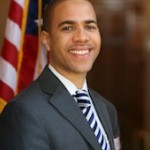
Rahn Mayo is a member of the Georgia House of Representatives, vice chair of the Henry County legislative delegation, and chair of the Cedar Grove High School Career Technology Advisory Council. One of the top priorities in his legislative agenda is to support innovative academic initiatives in education. Rep. Mayo has enhanced the quality of education for students in the career technology program, initiated a Youth Law Development Program, and provided strong support to the Future Business Leaders of America program. Rep. Mayo is also on the boards of Arthink DeKalb, an organization that promote arts and culture in DeKalb County, and the Brook Glen Neighborhood Association, through which he helped organize the “Adopt a Road” program in his community.
Lisa Ling is a television journalist with a long and colorful career that started at a very young age. Ling started her television career at the age of 16 and was a reporter on Channel One News by the age of 18. By the age of 25, Ling was visiting and reporting on dozens of violent countries around the world as a senior war correspondent. Ling has gone on to host The View, National Geographic Explorer, and work as a special correspondent for The Oprah Winfrey Show. Today, Ling hosts the Oprah Winfrey Network’s Our America with Lisa Ling, a documentary series that takes in-depth looks at some of the most controversial issues in the United States today. In addition, Ling narrates a series of public service announcements to inspire parents and mentors to help girls reach their full potential as part of a radio campaign by the Alliance for Women in Media and the Dove Movement for Self Esteem. Ling has narrated several other documentaries, including the Oxygen Network’s Who Cares About Girls, and coauthored Mother, Daughter, Sister, Bride: Rituals of Womanhood, a book that celebrates and honors connections and differences between women around the world.
CFY is a national nonprofit organization geared toward education and helping students in low-income communities, together with their teachers and families, harness the power of digital learning to improve educational outcomes. Services CFY employs to achieve its mission include PowerMyLearning.com, a K-12 Learning Platform, and the CFY Digital Learning Program, an on-the-ground direct service initiative. To further its reach, CFY collaborates with over 30 other organizations through its Affiliate Network, serving over 40,0000 families from 100 schools to date. CFY is also a partner with Connect 2 Compete, the new private and nonprofit sector partnership to promote broadband adoption and improve outcomes in disadvantaged communities.
Brainfuse is one of the nation’s leading online education providers, serving a diverse client base of libraries, school districts, workforce centers, and universities. The organization works directly with libraries, colleges, and primary schools to achieve its goals, providing services such as homework help, online learning solutions, test preparation, writing assistance, and career assistance. Brainfuse is a partner with Connect 2 Compete, the new private and nonprofit sector partnership to promote broadband adoption and improve outcomes in disadvantaged communities.
Connect 2 Compete is a national private and nonprofit sector partnership created to increase broadband adoption and digital literacy training in disadvantaged communities throughout the nation. A subsidiary of One Economy, the initiative partners with influential corporations, including Microsoft and Best Buy; nonprofit organizations, including the Asian American Justice Center, the Joint Center for Political and Economic Studies, and the Minority Media and Telecommunications Council; philanthropic organizations, including Goodwill and the Knight Foundation; and key federal, state, and local government entities, including the Federal Communications Commission. This program, designed to help residents improve outcomes in education, health, and employment through broadband opportunities and technology solutions, embodies the ideals MMTC has embraced for a generation. We look forward to substantial and solid advances in adoption and digital literacy thanks to this initiative, as well as others it is sure to inspire.
February 24, 1955 - October 5, 2011
The world lost a prolific innovator last week. Steve Jobs, who was co-founder, chairman, and, until recently, CEO of Apple, spent decades of his life pushing the envelope in technological creativity and innovation. In the 1970s, Jobs helped develop the Apple II series, one of the first lines of personal computers. In the past decade, Apple has literally reinvented our personal devices, releasing the iPod, iPhone, and iPad through Jobs’s vision. In between, Jobs founded a computer platform development company called NexT, acquired the computer graphics division of Lucasfilm Ltd, and worked as CEO and majority shareholder of Pixar Animation Studios until its acquisition by Disney in 2006. Thanks to Jobs, a visionary and pioneer, our nation and indeed the world have surged forward in technological innovation. Steve Jobs, you will be missed, and we thank you for your contributions to mankind.
Wayan Vota is a senior director at Inveneo, an organization dedicated to “connecting those who need it most,” getting the tools of information communications technology, such as computers, telephony, and Internet access, to people and organizations in rural and highly underserved communities of the developing world. Vota is also the founder of ICTworks, an online resource for sharing and expanding knowledge on appropriate information and communication technologies. Vota also develops online content and on- and offline organization through multiple distribution channels, including the Technology Salon, One Laptop Per Child, the Educational Technology Debate, and mLabs World. In addition to his work, Vota has over 15 years of experience in IT-based solutions through work with Mercy Corps, IESC Geekcorps, and PricewaterhouseCoopers.
Catharine McNally is the founder of Keen Guides, a travel app that provides location-based, accessible video tours about places and attractions. McNally came up with the idea when on a trip with her family to a museum that offered audio tours for visitors, but only a cumbersome 50-page transcript for those who were deaf or hard of hearing. McNally’s solution of interactive video tours with closed captioning, accessible through mobile phones, was enthusiastically received by all visitors, both hard of hearing and not. The Keen Guides platform has received many accolades and continues to grow. McNally, deaf since before she was one year old, sits on the boards of the Alexander Graham Bell Association for the Deaf and the National Cued Speech Association.
The NAACP has long been a champion of equal treatment and civil rights for African Americans, and their work affects millions of lives to this day - right now, none more than Troy Davis. Troy Davis was convicted twenty years ago of shooting an off-duty police officer - a conviction that has since been put to doubt by recanted stories by seven of nine witnesses, reports of coercion, and even another key suspect who was never investigated by officials. In spite of the flimsy evidence against Davis, the Georgia judicial system has decided not to overturn the conviction, and Davis is scheduled for execution this Wednesday, notwithstanding his final plea with the Georgia Board of Pardons and Parole Monday morning. This is where the NAACP has come in. The organization has mobilized hundreds of thousands of people like never before, through online petitions, mass emailings, conference calls, and even a Twitter hashtag, galvanizing multitudes at the grassroots level. The NAACP’s online work complements its work offline - it has held press conferences, organized rallies, and delivered a petition with half a million signatures to the state parole board. NAACP, we salute your work, and we hope that your efforts - more far-reaching than ever in this digital age - work to save a wrongly-convicted man’s life.
Craig Newmark is an Internet entrepreneur and founder of Craigslist, the online community of free local classified ads and forums. A strong believer in keeping the Internet free, Newmark also founded craigconnects.org, a site that “helps connect people of good will for the common good by helping groups who’re really effective in areas including military families and veterans, helping find good, effective nonprofits, and who can help restore traditional journalism values like factchecking.” Newmark has also donated thousands of dollars to a non-profit organization whose goal is to combine the work of amateurs and professionals to produce investigative stories on the Internet. Newmark is a member of the Wikimedia Foundation
Al Kramer is Chairman of the Board of the Directors at the Media Access Project, a non-profit law firm and advocacy organization dedicated to promoting freedom of expression, independent media, and low-cost, universal access to communications services. An expert in telecom policy, Kramer has worked as General Counsel to the North American Telecommunications Association, guiding the organization on many efforts, including the 1984 AT&T divestiture and the 1996 Telecommunications Act. Kramer retired from his position as Partner at Dickstein Shapiro, LLP, where he lead the Communications Practice. Prior to his work at Dickstein Shapiro, Kramer was a partner in telecommunications law at Keck, Mahin & Cate. He is the nation’s leading expert on regulation of pay telephone service. He also founded Citizens Communications Center in 1969 - the first public interest communications law firm. And he has mentored dozens of minority and public interest lawyers over the years.
Amanda Rose is a social entrepreneur and activist whose life and work has taken her around the world. In 2009, Rose founded the Connect the Dots Foundation, an organization established to incubate and craft fresh global campaigns and initiatives that use technology to connect people offline for a good cause. In 2007, Rose spent a year researching the new social media platform Twitter. Her unique insight into the platform led her to found a movement called Twestival, an international volunteer effort to use social media like Twitter to raise money for important causes. The movement has so far helped build 55 wells with charity: water and worked with Concern Worldwide to give thousands of students the chance at an education. Rose also co-founded Space-2, an innovative film and event locations consultancy, and works advising technology startups.
Geena Davis is a well-known actress, most notably known for her role as the first female President of the United States on the series Commander in Chief. Arguably her most important roles to date, though, involved her work in founding the Geena Davis Institute on Gender in Media and the Healthy MEdia Commission on Positive Images of Women and Girls. The Institute is dedicated to working with entertainment creators and companies, educating the next generation of content-creators, and informing the public about the need to increase the number of girls and women in media aimed at kids and to reduce stereotyping of both males and females. The Healthy MEdia Commission brings together media leaders and subject related experts to create a blueprint of recommendations for promoting positive media images. Both organizations help fill the need to improve television images shown to our children, and especially young, impressionable girls, in our hyper-sexualized society.
Karla Ballard is the Chief of Strategy Development, Media, and National Partnerships at One Economy, a global nonprofit organization that leverages the power of technology and connects underserved communities around the world to vital information that will improve their lives. The organization is dedicated to getting broadband access to all and works toward this goal through its Digital Connectors Program and campaign to close the digital divide. Prior to her work with One Economy, Ballard worked as a bank officer at MBNA America. She is also the founder of the Youth Institute for Economic Leadership Development, or YIELD, a financial literacy youth development program, and has worked on the development of a model for comprehensive community reform piloted in the Congress Heights neighborhood of Washington, DC.

Henry Geller has a long career of philanthropy and advocacy behind him. A Dean of the communications bar, Geller was general counsel of the FCC from 1964 to 1970 and special assistant to its Chairman from 1970 to 1973. During the Carter Administration, Geller worked as assistant secretary of commerce for communications and information. Geller went on to work as executive director of the Washington Center for Public Policy Research of Duke University and then as a communications fellow at the Markle Foundation. Within MMTC, Geller is best known as the co-founder of our Best Minds Policy Committee, which meets eight times a year to consider long-term issues in communications policy. At MMTC’s 25th Anniversary Access to Capital and Telecom Policy Conference, Geller and fellow co-founder Richard Bodorff were inducted into MMTC’s Hall of Fame.
Richard Bodorff is a co-founder of MMTC’s esteemed Best Minds Policy Committee, which meets eight times a year to consider long-term issues in communications policy. At MMTC’s recent 25th Anniversary Access to Capital and Telecom Policy Conference, Bordorff and fellow co-founder Henry Geller were inducted into MMTC’s Hall of Fame. In addition to his work with MMTC, Bodorff is a partner at Wiley Rein LLP’s Communications Practice, where he represents radio and television licensees before the FCC. Bodorff also serves as director of the Commonwealth Public Broadcasting Corporation and the Broadcasters Foundation of America.
Last week, MMTC held its 25th Anniversary and 9th Annual Access to Capital and Telecom Policy Conference – and it was our best ever! Attendees enjoyed dynamic, energetic, and informative speakers that included entrepreneurs, policy makers, and advocates. The conference was attended by several FCC Commissioners, new and old; representatives from the White House and other government agencies; and venture capitalists looking for the next entrepreneur with a great idea. Needless to say, brilliant discussions flourished, priceless advice was given, and invaluable connections were made. Everyone who registered for and attended the conference is a Hero – attending to better yourself and others is a huge step forward for minorities, entrepreneurs, and closing the digital divide.
Katie Jacobs Stanton has done much to earn the title of People’s Hero, both in Silicon Valley and in Washington. Stanton is currently the head of International Business Strategy at Twitter, but she has worked as Director of Citizen Participation at the White House, where she played an integral role in incorporating Twitter use in outreach efforts by the Obama Administration. Stanton also made extensive use of the social media platform in her role as Special Adviser to the Office of Innovation at the U.S. Department of State. Stanton has worked at Google, Yahoo Finance, and was a board member of the Los Altos Educational Foundation, a nonprofit organization dedicated to fundraising for the Los Altos, California, school district. Through her work in the government, private sector, and fundraising foundation, Stanton has played an integral role in bringing us closer to closing the digital divide.
Dra. Antonia Pantoja, a native of San Juan Puerto Rico, founded ASPIRA, the only national Hispanic organization dedicated exclusively to developing the educational and leadership capacity of Hispanic youth, in 1961. After migrating to the United States in 1944, Dra. Pantoja was galvanized by harsh racism and discrimination, leading her to become an activist and mentor to coworkers and members of her community. She spent years furthering her education, earning multiple scholarships and eventually earning her PhD. While pursuing a graduate degree at Columbia University, Dra. Pantoja created the Hispanic Youth Adult Association. She went on to establish the Universidad Boricua and the Puerto Rican Research and Resource Center in Washington, DC, and the Graduate School for Community Development in San Diego. Dra. Pantoja was also involved in several community and professional organizations, including the Ford Foundation, the National Urban Coalition, and the Council on Social Work Education. Dra. Pantoja passed away in 2002 at the age of 79, but her legacy and spirit continue to live on.
Patricia de Stacy Harrison is the president and CEO of the Corporation for Public Broadcasting (CPB), the largest single source of funding for public radio, television, and related online and mobile services. During her tenure, Harrison has led the CPB in a strategic focus on three D’s: Digital (investments in innovation and technology); Dialogue (investments in local community engagement, partnerships, and service); and Diversity (investments and commitment to diversity of content, talent, and service). To reach these goals, Harrison created the Diversity and Innovation Fund for public media, radio, television, online, and mobile. Harrison has received the Leadership Award from the White House Initiative on Historically Black Colleges and Universities, the U.S. Secretary of State’s Distinguished Service Award, and the Alliance for Women in Media’s Star Award for exemplary vision and leadership.
Clear Channel - the largest radio station owner in the nation - has helped close the digital divide by donating MMTC six stations in the past two years. Lack of access to capital and other barriers keep minority ownership low, and Clear Channel is working with MMTC to fix that problem. The MMTC-Clear Channel Ownership Diversity Initiative is an ongoing program to expand ownership and training opportunities for minorities, women, and other underserved groups. Two of the original stations donated to MMTC have been awarded to minority, female broadcasters, and MMTC has used others as training grounds for minorities who are interested in radio ownership but need experience operating a station. Clear Channel, we thank you for taking such significant and proactive steps toward closing the digital divide!

Karen Buller is the President and CEO of the National Indian Telecommunications Institute, a Native American-founded and -run organization dedicated to using the power of electronic technologies to serve American Indian, Native Hawaiian, and Alaskan Native communities in the areas of education, economic development, language and cultural preservation, and tribal policy issues . A member of the Comanche Nation of Oklahoma, Buller has testified before both houses of Congress and the FCC on Universal Service and other telecommunications issues related to Native Americans. She is on several boards including the Universal Service Administrative Company, Civil Rights Telecommunications Forum, and National Congress of American Indian’s Digital Divide Task Force
Large corporations are often seen in a negative light - many abuse government tax breaks, toe the line of environmental and other regulations, and engage in shifty accounting practices that artificially inflate their value. But we often forget about the organizations that have made wholehearted efforts to make the nation and world a better place. In a time where state and local governments are decreasing funding for “nonessential” programs in schools like art and physical education, corporate entities provide financial backing to keep such programs alive and give children opportunities they would never have otherwise. Target, for example, has donated 5 percent of its income to communities since its founding - totaling over $1 billion. Comcast has donated over $1.8 billion since 2001 to national and local non-profit organizations across the country, including the National Urban League, National Council of La Raza, One Economy, and MMTC, to create successful programs like the One Economy campaign to close the digital divide. While there are indeed corporations that exercise greedy and unethical practices, we should remember to look at both sides of the coin - countless others have made a significant impact on the quality of life for millions of Americans and around the world.
Kathy Johnson is the President of the National Association for Multi-Ethnicity in Communications (NAMIC), a trade association that educates, advocates and empowers for multi-ethnic diversity in the telecommunications industry through its 18 nationwide chapters. Although Johnson was named President of NAMIC in 2005, she has been with the organization for over two decades and has done a lot for the organization and minorities in that time: she has transitioned the national headquarters from California to New York City; helped to secure multi-million dollar funding for capacity building and programs; and executed the launches of NAMIC’s prestigious Executive Leadership Development Program (ELDP) and Leadership Seminar for middle managers, among other initiatives. Johnson has been recognized by Multichannel News, CableFax Magazine, CableWorld Magazine, and TelevisionWeek Magazine, where she was named Cable Executive of the Year in 2008.
The current FCC has been faced with many controversial issues since its term began in 2009. From facilitating the DTV transition, to formulating a National Broadband Plan, to rules on Internet neutrality, the FCC has had its hands full as it carefully weighed decisions that would affect the entire nation for years to come. The decision on the merger between Sirius and XM was an important one for minorities, and no one has played a more vital role than Commissioner Clyburn. Through the FCC, Clyburn shepherded the diverse-entrepreneurs initiative, a move that has given five minority companies the opportunity to get channels onto SiriusXM. On the selection of the companies that were awarded the leases, Clyburn stated, “Through this endeavor, groups that have been historically underserved will be able to enjoy a wider variety of creative and entertaining options on a national platform, and I am looking forward to the launch of these new stations as soon as possible.” Thank you, Commissioner Clyburn, for helping the nation take another pivotal step forward in closing the digital divide!
Kendrick Meek has spent a lifetime becoming an inspiration and champion of the people on social and economic issues ranging from increasing minimum wage; to supporting stimulus packages for jobs, infrastructure, and energy; to opposing a proposed ban on same-sex marriages. During his political career, which encompassed the Florida State House of Representatives, the Florida State Senate, and finally the U.S. House of Representatives, Meek was a strong voice in these issues and more. On his lifetime of public service, Meek has stated, “Public service is a legacy I learned from my mom, and that I hope to pass on to my own kids.” His next moves to make a difference in the lives of millions will be as a member of the Editorial Board of Politic365, the nation’s premier digital destination for politics and policy related to communities of color. On his new position, Meek stated, “I want to build on Politic365′s strengths - its news, its analysis, its informed and civil conversations - on the challenges facing our nation.”
Commissioner Meredith Attwell Baker was appointed to the FCC by President Obama in 2009. During her time with the FCC, Commissioner Baker has been a consistent champion for free markets, judicious spectrum reallocation, and affordable broadband access for all Americans. Prior to her appointment to the Commission, Baker was the Acting Administrator of the NTIA. In this role, Commissioner Baker managed one of the greatest civil rights initiatives in broadband history - the low-income DTV voucher program, which was initially recommended by MMTC. Her leadership made it possible for millions of low-income American families to successfully navigate the transition from analog to digital television. Commissioner Baker has worked for the good of the entire nation, helping us take pivotal strides down the path toward a better future. We know she will continue to promote positive change and make victories in civil rights for years to come.
In March, BBSJ reported on the ongoing issue with several technology companies refusing to release their employment data, as well as a startling unemployment gap in the high-tech workplace. Last week, we finally had some good news on the matter. Several tech companies - including Comcast, Verizon, Cox Communications, Cisco, and Hewlett-Packard - have taken significant proactive steps in increasing minority employment and media ownership and even engaged in supporting STEM programs for middle and high school students to help bolster the future workforce. In addition, several tech firms have made Diversity MBA Magazine’s 2011 list of the “Top 50 Companies for Diverse Managers to Work.” We applaud the efforts of these organizations for taking decisive measures to close the minority employment gap. We hope they will continue to serve as great role models for other companies.
Javier Palomarez is the President and CEO of the United States Hispanic Chamber of Commerce, an organization whose goal is to foster Hispanic economic development and to create sustainable prosperity for the benefit of American society. It is the leading advocate for nearly three million Hispanic-owned businesses and over 200 local Hispanic chambers throughout the United States. In addition to his work as CEO, Palomarez volunteers for Habitat for Humanity and Catholic Charities USA. He is also a board member of the National Latino Children’s Institute and Amigos for Kids. Prior to his work with the Hispanic Chamber of Commerce, Palomarez led diversity outreach programs at ING Financial Services. He has been named “One of the 75 Most Influential Hispanics” by PODER Magazine.
Comcast announced last year that it would institute a $20 million fund to finance minority startups. The company since has turned the concept into a reality, and it is planning to use part of this fund to create a minimum of ten new digital networks over the next eight years, all African-American or Hispanic owned or operated. Comcast has also pledged to provide support for training, internship, and mentoring programs for minority students, all in an effort to expand its commitment to diversity and minority involvement in the development of “new media content and applications.” Not only will this be a tremendous stride forward in closing the Digital Divide, but, as David Honig put it, “With the creation of new minority-owned networks and more minority-based programming, the media landscape will finally begin to reflect the true racial composition of the media landscape will finally begin to reflect the diversity of the nation.”
The FCC took a big step last week when it released an Enforcement Advisory on Advertising Nondiscrimination - the first new federal civil rights mandate since 1977 and the only one ever adopted without opposition. The Advisory was a two-page reminder to broadcasters that they must certify that their advertising contracts do not discriminate. In a Commission that has focused largely on the DTV transition and then been tied up with net neutrality rules and the National Broadband Plan, this is a huge first step in getting back on track with focusing on civil rights. MMTC has found that advertising discrimination drains about $200 million dollars from minority broadcasters every year. Needless to say, the FCC’s actions last week are a big deal in leveling the playing field for all broadcasters. While much work remains to be done, FCC, we salute you, and we hope you can continue progressing toward a fair and equitable communications industry in the 21st century.
Cecilia Garcia has dedicated much of her life to philanthropy and closing the digital divide. Most recently, her work has led her to the position of Executive Director at the Benton Foundation, whose mission is to “ensure that media and telecommunications serve the public interest and enhance our democracy.” Prior to her work with the Benton Foundation, Garcia served as Executive Director of Connect for Kids. She has also worked as a press secretary at the House of Representatives, Communications Director for the Congressional Hispanic Caucus Institute, and as a Producer and Director for three television stations, including PBS. Garcia’s decades of work have brought us much closer to closing the digital divide, and there is much more to come.
Bryndan Moore is the Founder and CEO of Alumni Roundup, a website and network for alumni of Historically Black Colleges and Universities. In addition to simply connecting HBCU alumni to their former classmates, Moore hopes he can use the website to galvanize its members to action. He has stated, “We need to address some of the work that needs to be done in our communities and our families.” One goal of Moore’s is to increase health awareness within African American communities. To accomplish this, he has created an “Alumni Wellness” program through Alumni Roundup that will include running and walking events across the country, engaging college students on an HBCU campus tour, and creating “a new web portal with mobile programming that will provide goal tracking, and the ability to connect with local groups for people who are interested in exercising, or cooking, or whatever.” In addition to his work with Alumni Roundup, Moore is an author and expert speaker on African American digital empowerment.
The world watched a tragedy unfold this month when Japan was dealt the triple blow of an earthquake, tsunami, and nuclear crisis that is still unfolding. Thousands have died, and thousands are still missing. Throughout this tragedy, however, the Japanese people are showing a steadfast resilience and sense of unity that is rarely seen anymore in today’s world. We have been afforded the opportunity, through the Internet, to learn about heroic nuclear plant workers who risk their lives day in and day out to keep reactor cores cool to avert a nuclear meltdown; about the heartwarming, orderly way in which the Japanese citizens line up for food and aid, at a time when we would expect to see mobs looting and fighting over basic necessities; about the Japanese student studying in America found out her family was alive thanks to a video on Youtube. In a time of tragedy, stories of survival and miracles abound, and technology makes it easy to keep up to date, and, of course, to contribute to relief efforts. Thanks to technology, we can remain connected and help a people in crisis.
Tonee Bell has dedicated his life to bridging the digital divide since 1999, when he began building a company specifically for that purpose. The company, A Unity System (AUS), is a PC supplier and distributor whose mission is “to become a leader and catalyst for change in both business and your community by filling the computer-access gap in homes, schools and in the community, helping to bridge the digital divide.” AUS donates a portion of all its profits to community programs focused on education, diversity, and closing the digital divide. Bell has completed contractual relationships with suppliers, distributors, and a major national retailer; conducted serious negotiations with Fortune 500 companies; and led his company to a point where it is poised to move into the retail phase at several major office superstores.
Dr. Elva Jones is a professor and Chair of the Computer Science Department at Winston-Salem State University. Dr. Jones has helped lead the university to win a $600,000 grant from the National Science Foundation to support highly qualified, economically disadvantaged, students to study computer science and information technology and to revitalize interest in those fields. “Our efforts are aimed at increasing the number of highly trained, underrepresented computing professionals, as well as developing a new generation of computer science and information technology leaders and researchers,” Dr. Jones has stated, and she indeed centers her career on exposing minorities to computing and leading them toward successful computing careers. Dr. Jones has received two JOVE Research Awards for her research in space data retrieval and has served on several boards, including the NC Space Grant Consortium Executive Board since 1996.
The National Association of Black Owned Broadcasters (NABOB) held its 27th Annual Communications Awards dinner last week to reward pioneers and strong voices in the broadcasting industry. NABOB put the spotlight and due recognition on those who have worked hard to make a difference for African Americans in broadcast, and also brought to light issues plaguing subsets of the industry – such as the slow death of the Blues genre and the beleaguered state of many record companies. Award recipients were made up of an eclectic mix of highly regarded individuals: Soledad O’Brian, Slinger “Mighty Sparrow” Francisco, Dr. Bobby Jones, and Buddy Guy. We thank NABOB for bringing so many people together at this esteemed event, and we salute you for your dedication to the education and training of the next generation of leaders in the telecommunications industry.
The National Telecommunications and Information Association completed an historic undertaking: the documentation of broadband availability in the United States The data was released in an interactive map available online that allows visitors to customize their views not only by location, but by maximum advertised broadband speed, number of available broadband providers, and demographic characteristics, among other factors. The full website includes rankings, summaries, a blog, and even a classroom to learn more about broadband. We thank the NTIA for their work in providing a tool to help us close the digital divide, and we hope broadband providers and government agencies alike can use this data for positive change.
Congressman Cliff Stearns has been a member of the House of Representatives since 1988 and is highly regarded for his extensive record on fiscal responsibility. In the 11th Congress, he was the Ranking Member of the Telecommunications, Technology and Internet Subcommittee of the House Energy and Commerce Committee. Congressman Stearns is an Ambassador for Innovation Generation, an organization committed to empowering young leaders such as entrepreneurs, policymakers, and technologists to better serve their communities. According to Stearns, “I am helping to ensure that the private sector has the flexibility to innovate and that Americans are able to reap the benefits of this innovation. In the case of broadband, more work still remains to be done.”
Love video games? You can thank Joseph Saulter for being the visionary behind Entertainment Arts Research, Inc. (EARI), a company that creates, develops, and publishes video games and interactive entertainment that reflects cultures often overlooked by the mainstream media. Over the years, Saulter has collaborated with big names like the Microsoft Bill Gates Group, Blacks in Gaming, Sony, and Blizzard, the company behind massively popular online game, World of Warcraft. Impressed? That’s not all. Saulter is also a well-known musician and composer with over 30 years in the entertainment industry under his belt, with Broadway credits that include Hair and Jesus Christ Superstar. Saulter is a member of several boards and industry groups (both gaming and music), and also active in the field of education - he is the founder of the Urban Video Game Academy, which teaches high-risk students how to design video games.
Thurman Jones is the President of the Patriots Technology Training Center, a nonprofit organization that teaches children and teens science, technology, engineering, and math, or STEM. The Center’s goal is to “help minority students to bridge the digital divide to careers in STEM by encouraging them to enter college-oriented curricula leading to careers in those fields,” according to Jones. This is done through academic competitions hosted by the Center, where students work with mentors and are provided with hands-on experience. The 12-year-old program has partnered with major technology organizations, the government, educational institutions, and foundations to support its mission. Jones encourages adults to donate and even become mentors of children in the program.
John William Templeton is a true renaissance man bringing his experience as a keynoter, panelist, and author, to the benefit of his community. Since 1988, Templeton has been President and Executive Editor of eAccess Corp., a San Francisco based publisher of books, online content, and documentaries. Templeton’s latest documentary, Freedom Riders of the Cutting Edge, recounts the struggles and achievements of black computer pioneers of the 1950s and 1960s. While not writing for the National Black Business Month, a publication that he co-founded, he presents two annual reports, the State of Black Business and Silicon Ceiling, and annually selects the 50 Most Important African Americans in Technology.
Last week, MMTC held its 2nd Annual Broadband and Social Justice Summit in Washington, DC. The Summit brought together an eclectic mix of industry experts, policymakers, bloggers, civil rights activists, FCC Commissioners (both present and former), and Congressmen that are rarely seen in the same room. The effect was phenomenal – panelists and speakers discussed broadband and technological policy concerns, and audience members engaged in discussions with them, pointing out options to resolve these issues and even charging them to take more of an active role in finding solutions. Audience members also engaged online – most of the conference was streamed live over the Web, and attendees – both in-person and online – engaged in discussions on Twitter, providing real-time responses to what they heard at the Summit. Anyone who participated in the Summit, or even attended and expanded their knowledge about these issues, should be commended – your participation, and even your presence, was a step toward closing the digital divide.
The Reverend, Dr. Martin Luther King, Jr., had a dream that “one day this nation will rise up and live out the true meaning of its creed: We hold these truths to be self-evident: that all men are created equal.” There has been debate on what Dr. King would say if he were alive today, but I am sure he would be an advocate for digital equality as well. Dr. King believed in freedom for everyone – freedom to learn, freedom to live, and the freedom for all men and women to enjoy the rights promised to us in the Constitution. While he unfortunately did not live to see his dream come true, Segregation and the divisive Jim Crow Laws of the South were abolished after his death, thanks to the movement he started. But the fight still isn’t over. There still remain vast disparities in opportunities and access to them in this nation with the new digital age. Let us help keep Dr. King’s dream alive by working to close the digital divide.
The nation fell victim to another tragedy last week – a gunman opened fire at a Tuscon shopping center, targeting Representative Giffords and shooting twenty people. Giffords appeared to be a political target. She was a strong supporter of the Health Care Reform in 2009, and Sponsor of such Legislation as the Combat Troops Tax Relief Act of 2007, the Innovation Employment Act, and the Back to School Act of 2010. A member of dozens of Congressional Committees, one noteworthy position she promotes is an agenda of energy independence and solar initiatives in an effort to make Southern Arizona the “Solar-con Valley” of the nation as a member of the House Science and Technology Committee. Rep. Giffords is also a member of the Congressional Internet Caucus, Congressional Human Rights Caucus, and House Science, Technology, Engineering and Mathematics (STEM) Education Caucus. Rep. Giffords has done so much in her short political career to further this nation. Currently, she is in a medically induced coma, with part of her skull removed to avoid brain hemorrhaging. Rep. Giffords, you are in our prayers, and we hope you and the other victims in this senseless shooting make a full recovery.
Jonathan Adelstein has done much in his life to warrant the People’s Hero title. A strong advocate of improving rural telecommunications and broadband, he enacted many policies as FCC Commissioner from 2001 to 2009. Some of his noteworthy achievements include improving universal service, improving access to spectrum for both large and small companies, and fighting for media diversity and localism, among many others. Currently, Adelstein is the Administrator of the U.S. Department of Agriculture’s Rural Utilities Service – He was nominated by President Obama and unanimously confirmed by the Senate for the position in July of 2009.
The past two years have been cause for much teeth-grinding on Capitol Hill and in American households. The partisan rifts that have reverberated through the country have led to much less progressive legislation than was expected when President Obama was elected. Last week, however, Congress finally took some bipartisan steps forward and voted to end the “Don’t Ask Don’t Tell” policy in the military. While the vote was an important one for the nation and the military, regardless of one’s stance on the issue, it was also important for another reason: Politicians who have bumped heads and been virtually unable to agree on anything as of late were able to come together and vote on a very controversial piece of legislation. It is a sign that partisan bickering and political grandstanding may finally fizzle out and we can get the real change we were promised from the Hill in all areas, from technology to education. We hope that this bipartisan shift we’ve seen can carry on into the new Session coming up in a few weeks.
Congressman Bobby Rush, a man who has served as a member of Congress for 18 years, has done much for US citizens and the world of telecommunications during his tenure. As a member of the US House Energy Subcommittee on Communications, Technology, and the Internet, Congressman Rush has a strong voting record – he led the fight against telecom redlining, wrote the disadvantaged business provision in the broadband stimulus bill, fought to restore the minority media and telecom tax certificate, and is the strongest critic of weak civil rights enforcement at the FCC. Congressman Rush has also had a strong hand in the drafting of such legislation as the Consumer Product Safety Improvement Act of 2008. A true public servant, he was the coordinator of the Free Medical Clinic in the 1970s, which developed the nation’s first mass sickle cell anemia testing program.
Ben Jealous, the 17th CEO of the NAACP in the organization’s 100 year history, is the youngest person ever to hold the position. He more than earned it. Prior to his role as President, Jealous served as President of the Rosenberg Foundation, Director of the U.S. Human Rights Program at Amnesty International, and Executive Director of the National Newspaper Publishers Association, which is a federation of over 200 black newspapers. While attending Columbia University, Jealous was a leader on campus, organizing boycotts and pickets for homeless rights. When his good deeds earned him a suspension, Jealous took advantage of his time off, working as a field organizer for the NAACP. Currently, in addition to his role as President of the NAACP, Jealous is a board member of the California Council for the Humanities, the Association of Black Foundation Executives, and a member of the Asia Society.

This professor in the Walter Cronkite School of Journalism and Mass Communication at Arizona State University is the creator of the innovative Mobile Black History Project, a Smartphone app that gives visitors to historic African American landmarks instant access to information about the sites. Users need only to point the phone at the site for the information to pop up. Hill is also co-creator of the CitySeed app, which allows users to plant the “seed” of an idea and share it with others by “geotagging” an idea to its exact location. These free apps will help inform communities about their history and also allow them to work together to improve their neighborhoods. Hill’s history includes work as VP of Content with BET Interactive, Executive Producer of Special Projects at Washingtonpost.com, and President of the Washington Association of Black Journalists.
Anders Jones took his first major step at bridging the digital divide when he was just 14 years old. On a trip to Jamaica, his taxi driver told him of the dismal state of their school systems. Rather than just lend a sympathetic ear, Jones chose to act – he arranged for two teachers from the school system to fly to Boston for training, then returned to Jamaica with 10 computers, 70 cases of software, and 15 teen helpers. From this, Teens for Technology was born, an organization with a goal to help children in under-served countries that need technological skills and training. To date, computers have been donated to over 250 schools, benefiting more than 500,000 students in six countries in addition to Jamaica - Haiti, the Democratic Republic of Congo, Peru, Thailand, Pakistan, and Vietnam.
Last week was a sad one in the world of broadband and social justice – one of the bright lights of inspiration we looked to has passed on. Keith Murphy (Oct. 31, 1954 – Nov. 14, 2010) achieved much in his life – a co-founder of the African American Media Incubator, Murphy taught there for several years and shared his years of broadcasting experience and know-how with students in its nine-month program. At the time of his sudden death last week at 56, Murphy was working with MMTC and Morgan State University to try to re-start the Incubator. Murphy has also been an outlet for positive voices in the African American community. His radio show, The Urban Journal, has featured guests that range from director Spike Lee, to Black Enterprise Magazine founder Earl Graves, to former President Bill Clinton. Murphy’s work on the show led to its honor of receiving the 2004 and 2005 Achievement in Radio Awards. Murphy’s presence on the airwaves and in our lives will be sorely missed. But he will live on, in our hearts, and through the lives he has touched.

Marc Morial has a professional career that is only 25 years old, but he has several titles under his belt: recipient of the Louisiana State Bar Association’s Pro Bono Publico Award for his legal service to the poor and disadvantaged as a lawyer; entrepreneur of several small businesses starting at the age of 15; Mayor of New Orleans and leader of its 1990s renaissance; legislator as a Louisiana State Senator; and professor of law at Xavier University. All this is in addition to his current role as the CEO of the National Urban League (NUL), the largest civil rights organization in the country. As President of the NUL, his goals are to redefine civil rights in the 21st century and to close socioeconomic gaps between Blacks and Whites and the rich and the poor. Morial is a lifetime “leader and advocate, a catalyst for positive change, and a hero anyone would be proud to emulate.
Freeman A. Hrabowski is a prominent educator and advocate for academic success in African American males. President of the University of Maryland, Baltimore Campus, since 1992, he has transformed the school into what U.S. News and World Report calls an “educational powerhouse.” In this time, he co-founded the Meyerhoff Scholarship Program to encourage African American men to pursue high-level academic work in science and engineering, a program through which 95% of graduates pursue higher degrees. Hrabowski has co-authored two books; serves as a consultant to several organizations, including the National Science Foundation and U.S. Department of Education; and is a member of several boards, including the American Council on Education and Joint Center for Political and Economic Studies.
Commissioner Tate did amazing things for minorities in telecommunications while she was an FCC Commissioner, and we were sad to see her go. A determined advocate for media and telecom ownership by women and minorities, Commissioner Tate was the Commissioner who placed the highest priority on broadband adoption and use, fought for minority ownership and entrepreneurship issues, and ensured civil rights enforcement. She also helped put together an FCC field hearing in New York on barriers to communications financing that put minorities together with government officials and lenders. Commissioner Tate continues her advocacy through MMTC as a member of the Board of Directors.
While many may know Robert Townsend best for directing movies such as Hollywood Shuffle and The Five Heartbeats, he is making a new name for himself. Townsend is the current Director of the V-Studio at One Economy, where he directs and produces Diary of a Single Mom for their Public Internet Channel. The V-Studio is dedicated to developing informative, engaging content that assists the American public in relevant matters of health, welfare, and safety and encourages them to adopt broadband. For BBSJ’s interview with Townsend on his work with One Economy and the importance of broadband adoption, click here.
With decades of history in the radio and television industries, Diane Sutter is currently the President and CEO of Shooting Star Broadcasting, a group that owns and operates television and radio stations and consults for private equity investors and institutions. Wanting to give back, she created the Broadcast Leadership Training program with NABEF, which gives minorities and women the skills needed to own and operate their own radio and television stations. Ms. Sutter’s passion for sharing her experiences with others makes her more than deserving of this title.
In his position since 2001, Commissioner Copps has been more than a pioneer for minorities in broadband and telecommunications. Commissioner Copps has pushed FCC enforcement of EEO and increases in transparency, diligently worked on the National Broadband Plan to ensure multicultural interests were included, and worked tirelessly to promote minority media ownership, among a multitude of other great work. He is stepping down as a Commissioner this year, and while he will be missed, his work at the FCC will live on.
When we say people’s hero, we mean it - Rey has really saved the day. In fact, between his founding of One Economy Corp, creation of the Public Internet Channel , work to educate young at-risk men, and myriad other acts of public service, Rey Ramsey has planted the seeds to save the world.
Multicultural Entrepreneur of the Week
Multicultural Entrepreneur of the Week

Jess Lee is the co-founder and head of product management of Polyvore, a Web site that allows users to mix, match, and create different sets of clothing that are found for sale online, then share their results with other users. Prior to her work with Polyvore, Lee was a member of Google’s Google Maps development team, where she helped launch features such as My Maps and multipoint driving directions. A Hong Kong native, Lee has a BS in Computer Science from Stanford University.
Prabha Selvadurai is the founder, president, and CEO of WorldBand Media, a North American media company specializing in the production and distribution of ethnic based media content. Selvadurai founded the company in 2007 and has since led it to become one of North America’s leading multicultural, multiplatform media corporations. Prior to founding WBM, Selvadurai was founded and headed a South Asian focused media group. He has also worked as a systems engineer for several media and wireless technology companies.
Noah Leask is the co-founder, president, chairman, and CEO of Ishpi Information Technologies, Inc. Ishpi, which means “to move forward” or “persevere” in the Chippewa language, is dedicated to providing IT and logistics support to the nation’s Armed Forces and intelligence agencies. Leask is an American Indian from the Sault Ste. Marie Tribe of Chippewa Indians, as well as a Service Disabled Veteran with over ten years of wartime service in the U.S. Navy. Leask was recognized in the Charleston Regional Business Journal’s “Forty under Forty” and Inc. Magazine’s Top 10 American Indian Entrepreneurs lists. In a time where cyber security is one of the nation’s top concerns, Leask’s multi-million dollar company brings hope for the future.
Andy Harold is the founder, president, and CEO of A. Harold and Associates, a diversified small business that provides technology, education, engineering and training support services and products to federal, state, and local governments. Harold brought over 17 years of experience to his firm, in addition to over 20 years of service as a U.S. Navy Reserves helicopter pilot.
Amos Winbush is the founder and CEO of CyberSynchs, a New York-based technology company that specializes in universal data synchronization and transfer. Winbush came up with the idea for CyberSynchs when he one day lost all the data and contacts in his cell phone. Thanks to his entrepreneurial spirit, Winbush contacted Sun Microsystems to develop a platform to store and transfer electronic data between media devices that was also universally compatible across devices, operating systems, and service providers. Within two weeks of its launch in 2008, CyberSynchs gained over 13,000 users and today has over half a million. The company plans to expand its service to other electronic devices, such as digital cameras and cable boxes. Winbush has received several awards and recognitions, including a feature in Black Enterprise and Inc Magazine’s 30 Under 30 list of entrepreneurs.
Richard Reingold is the co-founder and CEO of Black Heritage Network, Inc., a 24.7 cable and satellite network scheduled to launch this December. The network’s mission is to mission is to inform and entertain all Americans with the inspirational people, singular stories, and soaring sagas of our nation’s Black Heritage while presenting the people and events of today as they lay the groundwork for tomorrow. Reingold is also owner and board member of television station holding company Four Points Media Group LLC. Prior to his work with Four Points, Reingold was president and general manager of Washington, DC, CBS affiliate WUSA. He has also held several roles at NBC, including vice president of WRC-TV in Washington. Reingold currently sits on the community advisory board of WHUT, Howard University’s television station.
Have you ever accessed the Internet or a wireless network through a Linksys router? Chances are the answer is yes, and you can thank digital entrepreneurs Tsao for the technology. The Tsaos launched the Linksys company in the early 1990s, eventually growing to $450 in revenues and 220 employees. Following the tech bust, the couple gambled on new technology that they incorporated into their Linksys wireless router and networking design in 2000, and by 2003 the small company had over half a million orders for the device. That year, Cisco Systems bought the company for $500 million and invited Victor and Janie Tsao to stay on as CEO and CFO, respectively. Both Tsaos were Inc. magazine’s Entrepreneur of the Year in 2004.
Adriana Rocha is the co-founder and CEO of eCGlobal Panel, Inc., an online network designed to connect Latin American and Hispanic voices to product and service developers. Prior to her work with eCGlobal, Rocha held several management roles at eCMetrics, Inc., one of the first Latin American and Hispanic social media agencies. Rocha is a member of several organizations, including the Brazilians @ Online Media and Marketing, the Council of American Survey Research Organizations, and Hispanic Net.
Xeni Jardin is the founder and co-editor of Boing Boing, an award-winning collaborative blog that started as a magazine in 1988. Jardin also works as a contributor to Wired magazine and Wired News, and her work has been published in The New York Times, The Los Angeles Times, and The Guardian. In addition to her work with the Boing Boing blog, Jardin works as executive producer and host of Boing Boing Video, which provides videos online and in-flight for Virgin America, earning a Webby Award in 2009. Jardin has been a correspondent on National Public Radio and a technology news commentator on several networks, including CNN, MSNBC, and ABC.
Mena Trott is co-founder of Six-Apart, a software company and blog solution provider that created the Movable Type blog publishing system, TypePad blog hosting service, and the Vox Internet blogging service. In 2010, Six Apart merged with VideoEgg to form SayMedia, a digital media company that connects independent media content creators with their target audiences. Trott remains with the new company as a member of its board of directors. In 2004, Trott was named one of PC Magazine’s People of the Year and one of the world’s top 35 innovators under the age of 35 by MIT Technology Review.
Rashmi Sinha is the co-founder and CEO of SlideShare, the world’s largest community for sharing digital presentations, text documents, PDFs, videos, and webinars. Prior to founding SlideShare, Sinha founded MindCanvvas, a New Delhi-based game-like survey platform for customer research. Sinha has done research on search engines and recommend systems at UC Berkeley and has been named one of the Top 10 Women Influencers in Web 2.0 by FastCompany. Sinhi frequently speaks at conferences such as the Web 2.0 Expo and Future of Web Apps.
Deborah J. Lansdowne is the co-founder, president, and CEO of eKohs, Inc., a consulting firm offers clients a suite of CIO advisory services, management services, business performance improvement services, client care center services, and advice from subject-matter experts. Lansdowne has over 20 years of executive management, sales, and marketing experience in the information technology and telecommunications industries. Prior to founding eKohs, Lansdowne held leadership roles in several technology and telecommunications firms, including 15 years with Siemens Business Communications. Lansdowne received the National Federation of Black Women Business Owners “Entrepreneur of the Year” award, was featured on the cover of Black Enterprise Magazine, and has been named one of the “Fifty Influential Minorities in Business.”
Sherman Kizart is founder and managing director at Kizart Media Partners, a national media sales and marketing consulting firm. Kizart’s entrepreneurial skills and other experience in the media and telecom industry allows him to serve as an urban sales and marketing expert to some of the leading advocacy organizations. Prior to founding KMP, Kizart worked for Interep, Inc., as senior vice president and director of urban radio. Kizart has served as an advisor to the FCC on advertising discrimination and is chairman of the Urban Advisory Council for Radio Inc Magazine.
Ron Johnson is Founder and President of Ronson Network Services, a provider of a broad range of telecom solutions that include detailed engineering of fiber optic systems, 911 systems, and hybrid fiber coax video systems, as well as installation of AC and DC power systems, cable distribution systems, industrial cabling and wiring, and network and transport equipment for central offices and wireless shelters. Johnson’s leadership has led Ronson to be the largest African American-owned telecommunications deployment company in the nation. Johnson has been a member of the FCC’s Committee on Diversity in the Digital Age, a member of the Obama/Biden Transition Team at the Department of Commerce, and is a member of the MMTC Board of Directors. Johnson has over 35 years of telecommunications management and entrepreneurial leadership experience and is currently serving in his 13th year as Commissioner and Secretary of the Fairfax County Economic Development Authority.

Anthony Hernandez is co-founder, president, and CEO of Stardome Media, a Hispanic programming radio syndication company. Hernandez has over 16 years of experience in media and marketing, and through the course of his career, he has owned or managed communications companies in several industries. Prior to his work with Stardome Media, Hernandez co-founded and built the largest Spanish language radio network in the nation. Hernandez serves on MMTC’s Policy Committee and was a co-organizer of the Spanish Broadcasters Association.
William Crowder is the Managing Director of DreamIt Ventures, a startup accelerator program that provides seed funding, coaching, and connections to venture capitalists, among other things. Under the organization’s partnership with Comcast, Crowder is responsible for the oversight and operation of their joint Minority Entrepreneurship Accelerator Program. In addition to his work with DreamIt, Crowder is the founder and managing director of Growth Strategy Advisors, a boutique strategic advisory and business development company. Crowder has served as a director of strategy and business development at AOL and as a consultant with Mercer Management Consulting.
Eric Broyles is the co-founder and CEO of megree, Inc., a provider of proprietary social business software designed to show how everyone in the world is connected. To address the need for relevance and context for enterprises, small businesses, and political campaigns the company launched megreePro. Prior to his work with megree, Broyles worked for Gerson Lehrman Group as a senior executive. He has also worked as an attorney for AOL and the law firm Skadden, Arps, Slate, Meagher & Flom, LLP. Throughout his career, Broyles has represented numerous radio and television station owners in regulatory and transactional matters.
Joe Kutchera is an accomplished author, consultant, and speaker on reaching multicultural, Hispanic, and Latin American audiences online. His book, Latino Link: Building brands online with Hispanic communities and content, highlights how to connect to Hispanic consumers with culturally relevant, localized content on multiple platforms. Kutchera puts his expertise to use daily as the Director of Digital Marketing at Acento Advertising, an independent Hispanic advertising, promotions, and PR agency. Prior to his work with Acento, Kutchera worked for ContextWeb and Time Warner, where he launched the Web sites for CNNExpansion, Quien, and Chilango.
Carlos Vassallo, a native of Argentina, is the CEO of Latin Vision Media, a company that organizes conferences and networking events focused on marketing to U.S. Hispanics and Latin American executives. LatinVision Finance, a property of LatinVision Media, allows entrepreneurs to showcase their business ideas and capital needs to investors and helps investors find local, regional, national or international investment opportunities. Thanks to LatinVision, Hispanic-owned and -operated companies and organizations have been given the opportunity to flourish. Success stories include Altodot, a developer of social technology to help global brands, agencies, and advertisers to expand their fan- and follower-base in social networks; and Agenso Group, a Virtual Executive Assistant firm dedicated to helping small-to-medium sized businesses and entrepreneurs reach the Latino market. Prior to his work with LatinVision, Vassallo worked for several multinational corporations, including IBM and Elexco International.
John Tu, a native of China, is the cofounder and president of Kingston Technology, a manufacturer of memory products for desktops, notebooks, servers, and workstations. In 1996, just under 10 years after its founding, Tu and his cofounder sold 80 percent of the company for $1.5 billion and used $100 million of it to reward the company’s employees for their hard work, awarding bonuses of up to $100,000. By the time the company was sold, it had annual revenues of over $2 billion. Today, it enjoys over $4 billion in annual revenues. John Tu is an avid supporter and sponsor of the Freedom Writers Foundation, a nonprofit organization created to “inspire young, underprivileged students to pick up pens instead of guns.”
James Chu is the founder, chairman, and CEO of ViewSonic Corp., a leading global provider of visual display products that range from computer monitors to portable projectors. Chu moved to the U.S. from Taiwan in 1986 to work as president of U.S. operations for a Taiwanese Keyboard manufacturer. Just one year later, Chu founded Keypoint Technology Corporation, a distribution company that specialized in computer peripherals, such as power supplies, keyboards, and computer monitors. In 1990, Chu renamed the company ViewSonic, which averages over a billion dollars in global sales annually. Chu is a continuing inspiration to any aspiring entrepreneur.

Earl Graves is the founder and publisher of Black Enterprise magazine, the premier business, investing, and wealth-building resource for African Americans, and Earl G. Graves Ltd, the parent corporation of Earl G. Graves Publishing Co. and publisher of Black Enterprise. A savvy entrepreneur, Graves turned a profit on the magazine by its 10th issue, and Black Enterprise’s sales have continued to enjoy steady annual increases. Prior to his founding of the magazine, Graves was chairman and CEO of Pepsi-Cola of Washington, DC, LP, the largest minority-controlled Pepsi-Cola franchise in the country. Pepsi awarded Graves the Harvey C. Russell Inclusion Award, and Fortune magazine has named him one of the 50 most powerful and influential African Americans in corporate America. Among many positions in addition to his role at Black Enterprise, Graves is on the boards of the American Institute for Public Service and The Schomburg Center for Research in Black Culture. He is also a Trustee at Howard University, the Special Contributions Fund of the NAACP, and the New York Economic Club.
Nguyen Minh Tri is a Vietnam-born American who started two successful companies by the age of 25 and has since founded many more. Among his companies are Viet Tech, premier Vietnamese software development and outsourcing company; Virtualosity Solutions, an Information Technology provider and software development company for Fortune 1000 companies; and MyWorld, the leading social and educational networking destination for high school students, college students, and young professionals in Vietnam. Nguyen Minh Tri was named Asia’s Best Young Entrepreneur by Business Week in 2007 and received the “Outstanding 50 Asian Americans in Business” award from the Asian American Business Development Center in 2010.
Rossy Castillo-Almonte is the founder and President of Agenso Group, a bilingual (English & Spanish) Virtual Executive Assistant firm catering to the small-to-medium sized U.S. businesses, entrepreneurs and Latin American business travelers in the United States. It specializes in helping U.S. businesses and entrepreneurs reach the Hispanic market. Castillo-Almonte has over a decade of experience in conference and events management. Prior to founding Agenso Group, she worked with Sodexho, managing corporate events for high profile accounts such as American Express and Lehman Brothers. In addition to her work with Agenso Group, Castillo-Almonte serves as Events Director for The Hispanic Professionals Networking Group.
Anton Calbaud, a self-expressed serial entrepreneur, is the founder and CEO of Altodot, a company that develops social technology to help global brands, agencies, and advertisers to expand their fan and follower bases in social networks. Founded only a year and a half ago, the company has already developed over 100 applications for its clients - which include Turner Broadcasting and MTV - helping the companies reach millions of people. Chalbaud also started Sonico.com in 2006, a Latin American social network that helps its members organize their lives online. The site currently has over 46 million users. Chalbaud is widely recognized as one of the leading Internet executives in Latin America.
Michelle Ebanks is the President of Essence Communications, Inc., the number one media and communications company dedicated to African-American women. Founded in 1968, Essence Communications, Inc., is comprised of many media and entertainment properties, including ESSENCE magazine and the Essence Music Festival. In addition to her post as President of Essence, Ebanks was named this month as President of People en Español, a newly created post at the leading Spanish language magazine in the nation. Prior to her work with Essence and People en Español, Ebanks was a vice-president in Time Inc.’s corporate division. She has also worked with Knapp Communications and Money magazine.
January 19, 1918 – August 8, 2005- May 15, 2011
Born in 1918, John H. Johnson spent his lifetime becoming an inspirational pioneer - an African American man born into poverty two generations removed from slavery, Johnson rose to create Johnson Publishing Company (JPC), the largest black-owned publishing company in the United States. JPC’s repertoire includes businesses in publishing, cosmetics, television production, fashion, and JPC brands, which include EBONY and JET magazines and Fashion Fair Cosmetics, the number one makeup and skin care company for women of color around the world. JPC also produces the Ebony Fashion Fair, the world’s largest traveling fashion show, which has donated over $47 million to charity. Johnson’s achievements were well-awarded throughout his life, including in 1996 when President Clinton bestowed upon him the Presidential Medal of Freedom. Over several decades of his life, Johnson represented the nation in several international missions, even dedicating several issues of Ebony to articles relating to African independence movements. Johnson’s spirit lives on through his lifetime of
nfluence, and through the millions of people he has inspired and touched.
Moctesuma Esparza is an award-winning filmmaker, producer, entertainment executive, and entrepreneur. He co-founded Esparza/Katz productions in 1988 and is the CEO of Maya Cinemas, a chain of megaplex movie theaters that caters to the United States Latino audience. Throughout his career, he has produced over twenty films, including Selena and Iron Man 2. In the 1960s, Esparza participated in the movement for the civil rights and equality of Mexican-Americans. He is still very active in public service - he is a Founding member of the César Chávez Foundation, on the Board of Commissioners for the Los Angeles Homeless Services Authority, on the Advisory Board of the National Hispanic Media Coalition, and on the Board of Advisors at MMTC. His latest film, “Sympathy for Delicious,” was released this month in Los Angeles, New York, and Washington, DC.
Renee Warren is the co-President of Noelle-Elaine Media, Inc., an event management, media relations, and video production firm founded in 1993. The organization manages projects for corporate, entertainment, and non-profit accounts locally, nationally, and internationally. Warren leads the company’s large-scale events for many clients, including Black Enterprise magazine, on projects such as the Black Enterprise Entrepreneurs and Women of Power conferences. Warren’s other accomplishments include launching the Calvert New Africa Fund and the annual Black Investors Survey. Also a real estate broker, national speaker, and educator at New York University, Warren has co-authored a book entitled You Buy the Peanut Butter, I’ll Get the Bread: The Absolutely True Adventures of Best Friends in Business with her business partner, Kirsten Poe Hill.
Justin Beckett has been an entrepreneur for decades, starting with investment banking immediately after college in 1985 and eventually moving on to found Affinitytv247, Inc., the leading developer of online video based affinity networks. Beckett also founded Fluid music, one of the world’s largest aggregators and distributors of independent music through partnerships with FremantleMedia and American Idol. Beckett also founded Music Gaming, Inc., in 2000. He sold the company to MySpace in 2001 and joined them as a member of their executive team, eventually repurposing the software and creating SkillJam Technologies, the world’s largest provider of online casual games and fantasy sports. Beckett is also a published author, producer, and member of several boards, philanthropic organizations, and mission teams.
Houston Williams is the Chairman and CEO of PNS Communications Group, a company he founded in 1987 to provide project management, construction, cabling, maintenance, and wireless services. With over 40 years of experience in the telecommunications and information technology industries, Williams serves on the board of directors of the US Chamber of Commerce and the Minority Business Round Table. His expertise has also led him to lecture at technology conferences, serve on industry panels, and advise high technology companies. In 2003, Williams was appointed to the Private Sector Senior Advisory Committee of the Homeland Security Advisory Council.
Dr. Emeka Akaezuwa is the Founder and CEO of Gaviri Technologies, a Universal Search Operating System company that provides a search engine that is compatible over all devices and networks. Prior to the founding of his company, Dr. Akaezuwa worked with Elsevier as the Director of Digital Libraries and and director of the IT consulting group. There, he developed information systems worldwide for corporate, academic and government clients and played a role in developing the world’s largest science, technology, and medical online information retrieval system. Dr. Akaezuwa is also a founding Trustee of the Global Literacy Project, a nonprofit organization dedicated to bringing literacy to underprivileged regions of the world.
Jerry Yang is the Co-Founder and former CEO of Yahoo! Inc. Yang was born in Taiwan and came to the United States at the age of ten. Yang has been instrumental in making Yahoo! one of the world’s most visited Web sites and one of the most recognized brands. As of the end of 2008, Yang is no longer the CEO of the company, but he is on the Board of Directors of Yahoo Japan, in addition to Cisco Systems and Alibaba. Yang is also on the Stanford University Board of Trustees and in Stanford’s electrical engineering Ph.D. program.
David L. Steward is the chairman and founder of World Wide Technology, Inc., one of the largest African-American-owned businesses in America, and Telcobuy.com, a World Wide Technology affiliate and provider of technology and supply chain solutions to customers and suppliers around the world. Founded in 1990, World Wide Technology has become a billion dollar company that specializes in providing electronic procurement and logistics services to companies in the information technology and telecommunications industries. Steward also serves both on the Executive Committee and is the Campaign Chair for the United Way of Greater St. Louis, Missouri, and is a Silver Beaver recipient from the Greater St. Louis Area Council of the Boy Scouts.
Michael Roberts is an entrepreneur, pioneer, and visionary. A graduate of St. Louis University Law School, he has been an entrepreneur since the 1970s. Roberts founded Roberts-Roberts & Associates, a major consulting and constructing management firm, with his brother in 1974. Eight years later, the brothers formed Roberts Brothers Properties, starting with an old Sears building that they revitalized into a thriving commercial shopping center, and moving on to build and renovate apartment buildings, condos, single-family homes, and shopping centers. In 1989, the brothers went on to found Roberts Broadcasting Company, a licensee for WRBU-TV in St. Louis, the first African-American owned, full-power station in the market in over twenty years. Michael Roberts created Roberts Wireless Communications in 1998, the nation’s first entirely African-American owned digital PCS telephone company, eventually merging the company with several others to become Sprint PCS’s largest affiliate in February of 2001. Roberts is a member of several boards and was a member of the FCC’s Diversity Advisory Committee in 2009.
74-year-old James Kim has been Chief Executive Officer of Amkor Electronics, Inc., one of the world’s largest providers of contract semiconductor assembly and test services, since 1968, and he is still going strong. In 1977, Kim founded Electronics Boutique, Inc., which eventually became Electronics Boutique and is well-known as “EB Games,” a popular distributor of video games and consoles through its “Game Stop” chain. Kim is Chairman of Anam Semiconductor, Inc.; Chairman of the Board of Anam Group Corporation; a Director of Mattson Technology Inc.; and was Director of Gamestop Corp. from 2005-2007.
Lori Perine is an expert in advanced technology, renewable and clean energy, and sustainable manufacturing, and she has used her skills to become a Managing Principal at Interpretech, LLC, and co-found TrueCarbon.org. Perine has also worked on the Obama-Biden Presidential Transition Team as an advisor on priorities for an innovation agenda, launched government affairs and policy analysis operations in corporate and trade association settings, and drove White House coordination of national Research & Development initiatives totaling $2.5 billion across 14 federal government agencies. She has been featured on the list of 50 Most Important African-Americans in Technology and named a Minority Access National S&T Education Role Model.
Darrell Freeman is the Founder and CEO of Zycron, Inc, a leading IT consulting firm that has over 250 employees nationwide. Thanks to Freeman, Zycron exploded from a small company in the early 1990s to a firm that serves Fortune 500 clients and the largest health care, government, and utility agencies in the nation. A beliver in service to his community, Freeman is chairman of the Nashville Chamber of Commerce, a member of the Federal Reserve Bank of Atlanta’s Small Business and Labor Advisory Council, and on the board of the Centennial Medical Center.
An attorney and communications industry expert, Frank Washington was the Chairman and CEO of Tower of Babel, LLC, from 2004 to 2008. He has served as President and CEO of computer technology solutions provider System Integrators and was a founder, investor, and principal in Aurora Communications, a broadcast radio company. Currently Washington has controlling interests in two broadcast television operations, and serves on numerous boards, including World Television of Washington, Spartan, and Quantum Communications. He is also the director of several nonprofit organizations, including UC Davis Medical School’s Center for Health and Technology and the California Chamber of Commerce board.
Love video games? You can thank Joseph Saulter for being the visionary behind Entertainment Arts Research, Inc. (EARI), a company that creates, develops, and publishes video games and interactive entertainment that reflects cultures often overlooked by the mainstream media. Over the years, Saulter has collaborated with big names like the Microsoft Bill Gates Group, Blacks in Gaming, Sony, and Blizzard, the company behind massively popular online game, World of Warcraft. Impressed? That’s not all. Saulter is also a well-known musician and composer with over 30 years in the entertainment industry under his belt, with Broadway credits that include Hair and Jesus Christ Superstar. Saulter is a member of several boards and industry groups (both gaming and music), and also active in the field of education - he is the founder of the Urban Video Game Academy, which teaches high-risk students how to design video games.
Melanie Campbell is the CEO and Executive Director of the National Coalition on Black Civic Participation (NCBCP) and Convener of the Black Women’s Roundtable International Public Policy Network. Campbell has over 20 years of experience as a civil rights leader, coalition builder and technology access advocate, and she is known for her powerful to build diverse coalitions that bring people together for the common good. The NCBCP has undertaken many highly successful projects under Campbell’s leadership, including Black Youth Vote!, a youth-focused leadership program; the Unity Diaspora Coalition Census 2010 Campaign; and the ReBuild Hope NOW Coalition to assist survivors of Hurricanes Katrina and Rita in rebuilding their lives in the Gulf Coast. Campbell is certified in executive non-profit management by the Georgetown University Public Policy Institute Executive Program and was a resident fellow at the John F. Kennedy School of Government’s Institute of Politics at Harvard University in 2003.
Kelley Dunne has more than 20 years of experience in the telecommunications industry and is recognized as an industry pioneer in deploying some of the first 4G broadband wireless capacities across the country. Dunne has an eclectic mix of telecommunications expertise, business acumen, and commitment to service that enables him to lead One Economy in its goal to expand its impact in underserved communities around the world. Dunne, CEO of One Economy since September 2010, has brought his prior experience as founder and CEO of Digital Bridge Communications Corporation, a provider of broadband wireless to small and medium-sized communities to the organization. Prior to working at his own corporation, Dunne held leadership positions with One Point Communications, AT&T Bell Labs, and Verizon, where he launched Verizon’s Rural Broadband Initiative, leading some of the most innovative broadband wireless deployments in rural markets, Native American reservations, low-income housing areas, and U.S. military bases.
Wayne Bennett is a man of two faces – On the one hand, he is a respected attorney at his own firm, Bennett Law, LLP, with a background as a mathematician and entrepreneur. On the other, he is the powerful, outspoken, no-holds-barred voice behind the Field Negro blog. Bennett’s blog brazenly points out incongruities, both in and out of the political arena, that most people would be afraid to even whisper in a public setting. Contrary to the impression given by its name, Bennett’s blog isn’t all about race – he criticizes everything from political hypocrisy to those guilty of texting and driving, and he does so in such a tongue-in-cheek, animated manner that it is impossible not to be entertained as you learn. Bennett has other hats as well – he is a member of the ACLU, sits on the Editorial Advisory Board of CIO Magazine, and is on the Board of Directors at Innovate First, among others. Bennett, we tip our hat to you for bringing a voice to many concerns plaguing African Americans and the nation.
Ralph Everett, President and CEO of the Joint Center for Political and Economic Studies, has a lifetime of achievements to celebrate. A Duke Law School graduate, he has advised several U.S. Presidential campaigns, including Ernest Hollings and Michael Dukakis; was a Senate Liaison to the Clinton-Gore Presidential campaign in 1992; and was the first African American to lead a Senate committee as the Democratic staff director and minority chief counsel to the U.S. Senate Committee on Commerce, Science and Transportation. Today, he has put all his political knowledge and care for his community into his work as President of the Joint Center, one of the nation’s premier research and public policy institutions and the only one whose work focuses exclusively on issues of particular concern to African Americans and other people of color.
Tony Brown has a lifetime of work behind him to deserve this week’s Multicultural Entrepreneur title. His other titles have included producer, bestselling author, educator, radio host, television commentator and film director. He is the commentator of PBS’s longest-running series, Tony Brown’s Journal, and host of the syndicated radio call-in show “Tony Brown” at WLIB AM New York. His television series was selected in the New York Daily News as one of the top 10 television shows of all time that presents positive Black images, and he has been named one of the 100 most important radio talk show hosts in America by the Talkers radio trade magazine. A firm believer in education, Brown was the founding Dean of the Howard University School of Communications and recently became the first Dean of the Scripps Howard School of Journalism and Communications at Hampton University. Brown’s many talents and achievements make him a true inspiration.
Rick Hancock has been an entrepreneur and trailblazer for years, and he’s nowhere close to stopping. He is the Founder and CEO of Potpourri Media, a full service multimedia production and consulting company; Publisher of Rick’s RSS, a website that provides relevant information in Digital Media, Journalism, and Communications; and a consultant and multimedia content producer for many leading news companies including the Tribune Company, Viacom, and the Journal Register Company. True to his trailblazing nature, in 2003 Hancock was one of the first broadcasters to launch a blog. In addition to his entrepreneurial endeavors, Hancock is an Assistant Professor in Residence in the Department of Journalism at the University of Connecticut and host of the weekly Internet/Technology segment titled Rick’s RSS on Fridays for Fox 61-WTIC TV.
Jorge Ortega is the Managing Partner and Co-Founder of Newlink America, a strategic communications management consulting firm that helps connect corporate clients, non-profit organizations, and government entities with their desired target audiences. Ortega brings over 25 years of experience to the organization, including a position as President of The Jeffrey Group, an integrated communications agency focused on the U.S. Hispanic market and Latin America. A believer in giving back to his community, Ortega is a member of several advisory boards, including National Holdings, the Florida State University Center for Hispanic Marketing Communications, and a non-profit he created called the IKF/Wonderfund, which provides life saving medical care for children.
Shawn P. Williams is the Founder of Dallas South, an organization whose mission is to promote positive images of African-Americans in order to combat the negative images portrayed in the popular media. Under his leadership, the blog has transformed to a full-scale news operation, integrating novel and creative ideas such as a community of “Community Enrichment Officers,” or CEOs, who have spread the positive messages Dallas South helps publicize. A blogger and writer, Williams has been featured in the Pegasus News, Dallas Morning News, Politico, the Chicago Tribune, MSNBC, and NPR. Williams is also a member of AfroSpear and the Texas Progressive Alliance.
Ana Lydia Ochoa is the Founder of Padma Media & Marketing, a public relations and marketing firm that focuses on the new generation of bilingual, urban trendsetters of the Hispanic community. Prior to launching her company, Ochoa gained over ten years of experience in the industry, working as an Account Supervisor at RLPR where she managed the national media campaigns for Telemundo and Sears and provided strategic counsel to Nike. Ochoa has been recognized by the Women’s Health Organization, the City of Los Angeles, and Senator Hilda Solis for her work and advocacy. In her spare time, she studies Buddhism and volunteers with Free Arts for Abused Children, Reading to Kids, Pets with Purpose, and the Santa Monica Catholic Church.

Byron Lewis is an historic figure and entrepreneur in the media industries. His entrepreneurial endeavors include the cofounding of Urbanite Magazine in 1961, the founding of UniWorld Group in 1968, and the creation of the This Far by Faith television series in 1977, in addition to other work as a director and producer. Lewis’s biggest impact has been made with UniWorld Group, one of the largest African-American-owned ad firm in the nation. The company is a full-service agency that has helped such clients as AT&T, Burger King, Ford Motor Company, and The Home Depot reach minority consumers, as it has done for over forty years. Under Lewis’s leadership, the company has won some of the largest advertising assignments ever awarded to an ethnic agency.
Cathy Hughes is one of the biggest names in Black media. A co-founder of Howard University’s School of Communications, Hughes took WHUR-FM, Howard’s radio station, from #29 to #1 in the market before securing a loan (after being turned down by 32 banks) and buying her first radio station, WOL, in 1980. After pouring blood, sweat, and tears into it (a single mother, Hughes lost her house and had to move in to the station), Radio One was born – a company whose stations mix talk, activism, and political commentary. Radio One owns 51 stations across the nation. The first Black woman to lead a publicly traded company, Hughes is also the distinguished namesake of one of MMTC’s Law Fellowships.
Christopher Williams is a leader among leaders. Williams used knowledge and experience he gained from a background with Lehman Brothers to create The Williams Capital Group, L.P., the largest black-owned investment bank in the U.S., and Williams Capital Management, LLC., an investment management firm. The firm has ranked among the top 20 underwriters of U.S. investment grade corporate debt every year this decade. Williams has been ranked by Fortune Magazine as one of the 50 most powerful Blacks in corporate America, and his firm was ranked as the largest minority owned investment bank in Black Enterprises.
Clarence Wooten is what can be called a serial entrepreneur. A talented and innovative thinker, he has established several successful business ventures since 1998: ImageCafe.com, an Internet Superstore of customizable websites for small businesses; Wooten Ventures, a private holding company/venture catalyst focused on providing seed capital and entrepreneurial guidance for entrepreneurs with innovative business concepts; and Groupsite.com, a multi-purpose social collaboration platform, focused specifically on empowering groups of all types and sizes to make things happen. A founding member of NAMDE, Wooten is also currently developing the websites PhoneGreetings.com and Piqme.com, an organization to efficiently connect sponsors to thousands of targeted grassroots sponsorship opportunities.
Anthony Hernandez is a proven innovator in marketing and communications, evidenced by his diverse background. Most recently, Hernandez was COO of Enye Communications Holdings, where he developed a New Media Division that included responsibilities in creating international content partnerships. Prior to that, Hernandez was CEO of Latin Entertainment Network, where he developed a network of nearly 500 radio station affiliations and managed development of more than 30 nationally recognized radio brands. Hernandez has used the skills he honed in these companies and others to create his own organization, Hernandez Equity Holdings, a company that focuses on New Business Development, Operations Management, Media Sales, and Content Distribution. Hernandez is a founding member of the National Association of Multicultural Digital Entrepreneurs (NAMDE).
Shawna Renee Madison – better known as Shawna Renee – is a radio talk show host, author, and yoga instructor. Shawna Renee has enjoyed a career in radio for almost 15 years, working as a producer for the Joe Madison show, a programming assistant for a radio station in Baltimore, and producer/co-host of popular shows on several radio stations. Now, Shawna Renee is the creator and host of the Sirius/XM program “Cocoa Mode,” a show whose core values include empowering women to take an active role in transforming the social, political and financial conditions in their communities.
With over 15 years in the communications field, Jeneba Jalloh Ghatt is the Founder of The Ghatt Law Group LLC, the nation’s first communications law firm owned by women and minorities, and a voice for small, women, and minority owned business and technology companies. Ghatt has represented major national civil rights organizations in several landmark cases, including a successful challenge on behalf of the National Hispanic Media Coalition which resulted in the agency levying the largest fine against a regulatee in its history for violations of the children’s television rules. Among her many other accomplishments, Ghatt is a founding member of the new National Association of Multicultural Digital Entrepreneurs, host of a blog talk radio show called Right of Black, and promotes broadband policy and related issues on her blog, JenebaSpeaks.
Carl Brown is currently the Executive Director of the Prince George’s Community College’s Center for Minority Business Development (CMBD). The CMBD is designed to help minority enterprises in Maryland’s Prince George’s County build the capacity to compete and provides local minority business leaders with the ancillary skills and political business insight needed to build successful enterprises. As Executive Director, Brown shares his extensive experience in management, particularly in procurement and small and minority business programs, with aspiring entrepreneurs. His background includes managing the Disadvantaged Business Enterprise and Business Development Programs for the Washington Metropolitan Area Transit Authority in Washington, DC and a position as the Senior Contracts Manager for federal government contracts at Verizon Business in Arlington, Virginia.
Derek McKinney is an entrepreneur with over 25 years of experience in telecommunications systems. An electrical engineer and communications professional, he formed McKinney Consulting in 1997 to provide satellite and telecommunications solution to multinational corporations operating in remote regions. In 2003, the company merged with IPX International, of which he is currently COO. McKinney has managed telecom projects in over 60 countries everywhere from Africa to the Middle East and Europe, using his expertise in design, operations, management, and licensing of terrestrial and satellite based telecommunications.
This self-proclaimed “Bad Boy” isn’t just the popular voice behind “The Michael Baisden Show.” He is also the author of several books, two of which have become full-length movies. In addition, in 2005 he founded the Michael Baisden Foundation, an organization formed to eliminate illiteracy as well as promote technology and is dedicated to education, support and advancement in minority communities. This is another entrepreneur who could also be our People’s Hero.
John Muleta - September 26, 2010
John Muleta is the Founder and CEO of M2Z Networks, an organization whose ambitious mission was to provide free wireless broadband access to 95% of the US population, which is no small feat. Two weeks ago, the FCC rejected M2Z’s proposal, leading to the closure of the company and the end of the nation?s last hope for national free wireless broadband service. Muleta?s concept was ahead of its time, and history will prove him right.
This one is dedicated to Jose Mas, current CEO of MasTec, but really the entire Mas family should be lauded - these hard-working entrepreneurs built MasTec from the ground-up with good old-fashioned grit and determination. MasTec is now building broadband and telecommunications infrastructure for the entire nation. Jose Mas and the rest of the family are a true representation of the American dream.
Digital Divider of the Week
The Zetas Drug Cartel - November 13, 2011

Over the past year, gang violence has sharply escalated in Mexico, and international media reports of atrocities on innocent people have kept pace. Drug cartels have since fought back, kidnapping and murdering journalists and bombing media offices within the country. Many Mexican media outlets have since begun to censor themselves, declining to report on gang activity to ensure the safety of their reporters. As a result, Mexican citizens have turned to the Internet - a Web site called Nuevo Laredo en Vivo, specifically - to share information on which streets are safe to travel, where gunshots have been heard, and where drug cartel members have been sighted, all in an effort to keep each other safe. The Zetas Drug Cartel, however, has kept pace with technology. Recently, the cartel has tracked down, murdered, and decapitated several users of Nuevo Laredo en Vivo, leaving messages with each victim that others would meet the same fate. Mexican drug cartels such as these have taken the term “Internet censorship” to a new level, and we can only hope that their heinous acts don’t stand in the way of justice and Internet freedom.
Have you seen the latest e-mail from Bill Gates offering you $500 for every person you forward an email to as part as a market research project? What about the one from the Nigerian Prince offering to give you $1 million in exchange for doing a couple innocent wire transfers for him? Or the one from your e-mail provider saying your account has been compromised and you need to verify your login information to avoid termination of service? These are all exceedingly common scams that flood millions of inboxes every day. While some, like the Bill gates message, are relatively innocuous chain letters, others can lead to viruses, spyware, keyloggers, and in the worst-case scenario, identity theft. Pitfalls like these lay everywhere on the Internet, waiting for innocent, uninformed users to fall into their grips, and it is the fear of such pitfalls that makes millions of Americans unwilling to use the Internet. While anti-spam technology has come a long way through e-mail providers, we still have a long way to go, and we must combat the problem by educating the uninformed on how to safely navigate the Internet.
According to the U.S.-China Economic and Security Review Commission’s annual report, to be released by the end of the year, hackers have disrupted U.S. satellites through a Norwegian ground station connected to the Internet on at least four occasions in 2007 and 2008. By the fourth attack, hackers managed to take all the steps necessary to actually take over a satellite, but did not. While evidence supports the theory that China may have been responsible, the nation denied any involvement with funding hackers. And while the hackers did not wield their power over the satellite, they clearly can do so if they choose to in the future. The repercussions to such an attack could be dire, including damage to and even destruction of U.S. satellites. This scary scenario is a clarion call, if nothing else, to fix the holes our nation’s cyber security system as soon as possible.

Anonymous, the notorious hacker group responsible for dozens of high-profile security breaches all over the world, is at it again. In spite of recent arrests of several hacker members, the group appears to still be going strong. This time, the group, which has aligned with the Occupy Wall Street movement, has hacked into and released more than 600 MB of data full of private police information. The information included over 1000 names, addresses, phone numbers, and even social security numbers from Alabama law enforcement systems. Anonymous stated that it chose to attack law enforcement groups for being protectors of the “one percent” the OWS movement is protesting against. Regardless of what side of any issue a group is on, such attacks are never the answer. It can take years to repair the damage done to one’s life from such sensitive information falling into the wrong hands, a problem that over 1000 police officers, apparently collateral damage in a period of social unrest, now have to face. There are millions of people on the wrong side of the digital divide - those who choose not to adopt broadband because they are afraid of their personal information being used against them. Anonymous, thanks to their rampant cyber attacks on innocent people, has given them yet another reason.
In a time where a world of information is at billions of fingertips, yet many nations still try to oppress their citizens with misinformation and propaganda, Internet and media censorship are rampant. Turkey is one of the more egregious intruders upon the online freedom of its citizens - Reporters Without Borders ranked the nation 138th in its Press Freedom Index released last year. Notoriously known for its censorship on the global stage, Turkey’s government has become more cunning as of late, selling the act as a way to “promote public safety” and tweaking keywords like “filters” to more friendly euphemisms like “lists.” Meanwhile, dozens of the nation’s journalists are in prison. Arianna Huffington, co-founder of the Huffington Post, stated at this year’s Digital Age Conference that “efforts… to censor Web sites like YouTube and blogspot.com are utterly hopeless.… There isn’t just one way to communicate with each other now.” On the other hand, a recent study by the University of Toronto found that censorship techniques are becoming increasingly sophisticated and more difficult to circumvent. One thing is clear: Internet censorship is a tool of oppression, and access to information is the key to freedom.
Once again, identity thieves have made our digital divider list. This time, it appears that the biggest identity theft crime ring ever was busted last week. In this case, the ring used forged credit cards to buy Apple products in the US and sell them overseas. How’d they get the credit card information? Ordinary waiters and service workers swiped the information when trusting customers handed over their plastic. While the actual identity theft happened overseas - in Africa, the Middle East, Europe, and Asia - the ring was based in New York, and it’s chilling to think that your own information could have been stolen. Please remember to be vigilant - do not relinquish your debit card when unnecessary. Stolen debit card information can wipe out your entire checking and savings accounts if the accounts are tied to the same bank. When you need to use plastic, try to use a credit card - the thieves will not have access to your cash, and credit accounts tend to have more convenient, if not better, protection.
A coalition led by Google and Apple is currently engaged in moves to push for a tax holiday on more than $1 trillion in offshore profits. According to Bloomberg, the companies have employed a group of over 160 lobbyists headed by Jeffrey Forbes, who was once chief of staff to Max Baucus, chairman of the tax-writing Senate Finance Committee. At least 60 other lobbyists have once worked for a sitting member of the House or Senate. Those advocating for the break claim that such a holiday would return over $1 trillion to the U.S. that are currently held overseas. But several independent studies have revealed that in 2004, the last time such a tax break was put into place, the money benefited a very narrow set of shareholders; most of the money was used to buy back stock. The tax holiday being requested now will cost the government $78.7 billion over the next decade. The nation is in its worst economic woes since the Great Depression, thousands of programs that serve the public interest have been cut, and companies continue to seek tax breaks.
Cyber Bullies - September 25, 2011

In an era where children grow up online, chatting with friends and posting on Web sites behind any number of monikers, cyber bullying is rampant. Cyber bullies see “trolling,” or posting inflammatory remarks for the sole purpose of getting under others’ skin, as harmless entertainment. They are oblivious or, worse, apathetic to the effects they have on others. But cyber bullying has real consequences, and they can be tragic. Last Sunday, Jamey Rodemeyer committed suicide after bullies had tormented him relentlessly on social networking sites over his sexual orientation. Several posts actually called for his death and encouraged the teen to kill himself. Police are investigating whether to charge some of Rodemeyer’s bullies for his death, but while this may bring some justice, it will be too little, too late - nothing will bring Rodemeyer back to life. We have a responsibility to all our children to educate them about the pitfalls of the online world, the power of the written word, and above all, developing a sense of empathy for others. Because if Rodemeyer’s bullies had had just a bit more empathy - if they thought about how their words made Rodemeyer feel - he might still be alive today.
Cyber criminals and related terms (hackers, malware, the list goes on) have come up as our Digital Divider time and again, for various reasons. But we cannot stress enough how important it is to always be aware about your safety and security online. Last week, McAfee came out with its annual list of the most dangerous celebrities to search for, reminding us that the Internet provides dangers at every turn. According to McAfee, searches for celebrities and even notable names can land users onto sites embedded with malware, spyware, viruses, adware, spam, or Trojans. More popular celebrities present more danger as cyber criminals tailor their sites to appeal to the widest range of searchers. The FCC has reported that among broadband users, 9 percent use the Internet to gain access to music, movies, and entertainment, and among those who choose not to adopt broadband, 10 percent stay away from it due to the hazards of online life. In a world where a search for your favorite singer or movie star can lead to costly viruses, why would those who choose not to adopt change their minds? They can perform the same searches on their smartphones with significantly less risk. Security issues like these keep millions of people offline, and it is more important than ever to educate everyone on the importance of online safety.
Secretary of Homeland Security Janet Napolitano recently announced that cyber terrorism tops the list of security concerns. A decade after the 9/11 terrorist attacks, the nation is on high alert after receiving a credible tip that Al Qaeda is planning an attack on Washington, DC, or New York City. With increased security in both cities - “frozen zones,” truck inspections, and heavily armed police - the nation seems prepared to find and eradicate any potential threat. But what about cyber attacks against the nation’s infrastructure, moves that could potentially cripple the nation? A report by the Bipartisan Policy Center’s National Security Preparedness Group stated, “A terrorist group [could hack] into U.S. computer systems…disrupting our electric grid, shutting down power to large swathes of the country, perhaps for a period as long as several weeks…It is possible to take down cyber systems and trigger cascading disruptions and damage. Defending the U.S. against such attacks must be an urgent priority.” As we remember the tragedy that befell the nation ten years ago, we must also remember to remain vigilant on all fronts - on the ground and online.
Last week, Hurricane Irene barreled through the East Coast, and although she thankfully wasn’t as strong as meteorologists feared, she still managed to cause quite a bit of mayhem - power outages, flooding, and even loss of cell phone service in many areas. According to the FCC, Irene left 130,000 wirelines down, 1,398 cell sites out of service, over 1,000 cell sites running on backup power, and 500,000 cable subscribers without service. While Irene wasn’t as bad as, say, Hurricane Katrina, such outages could have been devastating if the hurricane was much stronger - millions of people would have had to rely on alternative sources for vital information. MMTC has strongly urged the FCC to amend its Emergency Alert System rules to supply life-saving information to non-English speakers in the event of such emergencies, and we hope that the FCC has looked at Hurricane Irene as a reminder of the work that needs to be done.
China is at it again. This year, we have celebrated the countless ways free speech over the Internet has benefited mankind, whether through watching social revolutions in the Middle East unfold or through considering what life would be like if Martin Luther King had access to online communication. It looks like China has missed the memo - or maybe it got the memo and doesn’t want to see its own people use the Internet to spark a revolution. Last week, a Communist Party leader, Liu Qi, told the nation’s Internet companies to tighten control over material online, stating that Internet companies should “strengthen management and firmly prevent the spread of fake and harmful information.” This news can be seen in both a positive and negative light - that social media and Internet-speed communications have afforded oppressed peoples the tools to transform governments at the grassroots level faster than we have ever seen, and also that we still have a long way to go to get unrestricted Internet access and freedom of speech to everyone. China’s flagrant moves to block the rise of government-toppling protests as seen in the Middle East are a testament to both sides.
Humankind, as a race, seems to have a very short memory. We ignore lessons of the past and sacrifice wisdom for easy fixes to complex problems. In 1958, Alabama attempted to bar the NAACP from acting within state borders and subpoenaed the organization for records that included a roster of its members. Given the racially charged atmosphere in the Deep South at the time, raw and exacerbated by anger at action for equal rights, anyone listed on the roster would without doubt be in danger of anything from ostracism to lynching by their neighbors. In a landmark case, the Supreme Court ruled the request unconstitutional because it would violate the 14th Amendment and “abridge the rights of its rank-and-file members to engage in lawful association in support of their common beliefs.” The society of the 1950s, though misguided in many ways, seemed to know and treasure the value of anonymity. Why is it that anonymity seems less precious and more expendable in our digital society? Anonymity can allow bad people to spread discord, depression, and even death – anyone from cyber bullies to Norway attacker Anders Behring Breivik can take advantage of it. But on the other hand, anonymity brings revolutions like those seen during this year’s Arab Spring. It brings salvation to victims of sexual assault. It brings voices to the people of Mexico who cannot stand up against bloodthirsty drug cartels in the open. High ranking representatives from Facebook and Google, though, have been among many pushing for an end to anonymity on the Internet as a way to prevent cyber bullying and the growth of dangerous extremists. We need powerful companies like these and others to be more forward thinking – if they’ve already forgotten the fights of the ’50s and even the revolutions of earlier this year…maybe we’re not as connected as we think we are.
The Government Accountability Office released a report last month that found that 23 of the nation’s 24 federal departments (referred to as “agencies” in the study) use social networking sites to disseminate information and engage directly with the public. While this sounds like a great use of social media engagement by our government - which it is - the report also reveals that of these departments, less than one-third have taken steps to prevent hackers from exploiting these sites to hack into federal government systems and obtain top secret information. According to the report, hackers can use methods that include spear phishing, which lures a specific person or group to download a document or click a link that then installs malware to the computer; social engineering, which uses personal information to build trust with a user in order to gain unauthorized access to sensitive information; and Web application attacks, which embed custom applications within social media sites that can then install malicious code onto federal computers to be used to gain unauthorized access. The level of complacency within the departments, variety of possible attacks, and the fact that malware targeting U.S. networks tripled from 2009 to 2011, spell a scary situation. The overwhelming effort needed to overhaul and fix this system could be why the U.S. Computer Emergency Readiness Team has had five directors in the past six years.

Control of a large share of any market or industry is a symbol of many things - it is a sign of hard work, a privilege, a burden - and a tremendous responsibility. This responsibility can be used for good, as with the Comcast-NBCU merger, which has provided millions of dollars for minority ownership, and with the synergies of the potential merger between AT&T and T-Mobile, which can improve industry diversity and weather the blow of the looming spectrum crunch. When this responsibility is abused, on the other hand, one entity benefits, and many, many others lose. Google has been accused by its competitors of manipulating its search results to favor the company’s own services. The Federal Trade Commission and the Department of Justice are both also looking into these accusations, and the Senate’s Judiciary Committee’s antitrust subcommittee will hold a hearing mid-September called “The Power of Google: Serving Consumers or Threatening Competition?” Google currently controls more than two-thirds of the global search engine market, holding the keys to access for millions - if not billions - of people to the gates of information. Manipulating search results for any reason is a disservice to every one of these people, and anyone guilty of the offense is nothing but a purveyor of the digital divide.
Argumentum ad hominem (n) - fallacious argument that attacks not an opponent’s beliefs, but his motives or character. A subset of the irrelevant conclusion fallacy, which diverts attention from the fact in dispute rather than addressing it directly. Unfortunately, we’ve seen many of these fallacies on both the Hill and among advocacy groups these days. The charged climate of the past two years as we face tough decisions related to spectrum, Internet rules, and mergers has led to a level of debate that many would be ashamed to see in an elementary schoolyard. We see ad hominem attacks - also known as “personal attacks,” better known as “mudslinging” - in politics all the time, and as disgusting as it is when we see it on the Hill, it is just as - if not more - disgusting when advocacy groups who are normally aligned on issues do it the moment they disagree on a certain point. A good argument provides well thought out counterpoints to conclusions presented, rather than pointing fingers at the opponent based on stretches of the imagination rather than incontrovertible fact. When we see this, the dialogue is cluttered with noise and no progress is made. We see this daily on the Hill - God help our national debt - and recently among telecom advocacy groups when it comes to net neutrality and the AT&T/T-Mobile merger. A word of advice to all: Counter the premises of your opponent’s argument with sound reasoning, and your own will earn more attention and respect.
Last week, MMTC released a report on Minorities and High Tech Employment. The report, a follow-up to the study released last year by the San Jose Mercury News, highlighted the state of minority employment in high tech, factors that contribute to the minority employment gap, why diversity in high tech employment matters, and proposals for improving the concentration of minorities in high tech industries. The numbers in the study were not surprising, given that the issue has been widely reported, but they were nonetheless appalling. While studies abound on the importance of employment diversity, and even ethics codes and industry practices dictate a more forward-thinking attitude toward minority employment, many companies in the tech industry continue to engage in discriminatory practices – and many even refuse to release employment data. Such practices do nothing but discourage minorities and women from pursuing technical degrees and occupations, and only serve to widen the digital divide.
It has been well documented that spectrum - the invisible resource over which electronic transmissions travel through the air to consumers - is facing a shortage. In this digital age, the amount of spectrum needed to support our demand for data services, in addition to television and radio signals, is steadily increasing. Unfortunately, some services hog a lot of bandwidth - Netflix alone accounts for 29.7 percent of downstream Internet traffic in North America during peak hours. Thanks to the laws of supply and demand, this drives broadband access costs up for all users, because they pay a flat monthly fee to sustain and expand their Internet service provider’s network and capacity. This means that all broadband subscribers are subsidizing Netflix and its customers, whether they subscribe to Netflix or not. This spells bad news for those who do not subscribe to broadband due to its prohibitive costs - Netflix’s gargantuan need for spectrum has the unfortunate side effect of perpetuating the digital divide.
The most recent Congressional buzz has surrounded the apparent stalemate (temporarily held at bay thanks to a shaky compromise) over the federal budget. Unfortunately, the debate, if not complicated enough, is heavily influenced by political grandstanding and chess moves carefully orchestrated to woo votes in the 2012 election. Caught in the crossfire are the American people, as beneficial services and organizations that rely on federal funding are being targeted for deep cuts. Among them is the Corporation for Public Broadcasting (CPB), an entity once envisioned as a catalyst for promoting growth and development of public media in communities throughout the U.S. CPB has brought us programming from Sesame Street to Frontline, educating the American people and remaining innovative to this day. Through the vision of CEO Patricia Harrison, the organization’s most recent focus has been on three D’s: Digital platforms for their programming; Diversity in their content; and Dialogue through investments in local community engagement, partnerships, and service. In our government’s nasty battle, an organization that is dedicated to the benefit of the American people as a conduit for education and intelligent discussion may be sacrificed. Congress, in your fight for votes and power, is nothing sacred?
It sounds a little counterintuitive - the nation’s hotbed of technology and innovation is a digital divider - but the unfortunate truth is that while Silicon Valley is innovative in the world of technology, its innovation stops at the door of diversity. BBSJ previously highlighted five Silicon Valley tech companies who refused to release their employment data, but the lack of diversity is not unique to them. The San Jose Mercury News reported that African Americans and Hispanics made up a total of only 6.2 percent of Silicon Valley’s tech force in 2008. The same study revealed that even though Silicon Valley’s workforce grew, the percentages of African American, Hispanic, and women employees within it had declined dramatically in recent years. In light of such data, the efforts of organizations like One Economy and the NewMe Accelerator are vital to the future of our increasingly digital world.
The so-called “Great Recession” has affected us all - the unemployment rate, gas prices, and the national debt are high, while morale is low. Millions of families have had to make cutbacks, and unfortunately, in determining the necessities in a budget, Internet access is often slashed. The power of broadband is often underestimated, and the irony is that it can actually improve the lives of those struggling to make ends meet. The days of walking into a company to hand in a resume are at an end, and broadband can bring thousands of potential employers literally to an applicant’s fingertips. It can be used to earn a degree, improve health care, and even find cheaper necessities like gas and groceries. The FCC has found that 8 percent of non-adopters - those who have access to broadband service but choose not to subscribe - had broadband at one point but decided to cancel their service. In a recession, writing off broadband service as an unnecessary cost is a big mistake - the utility of broadband access far exceeds its cost.
 This week, BBSJ reported on fakes and frauds online and the detrimental effects of viral misinformation. Online, false information abounds - just last week, a Photoshopped image of a racially discriminatory sign in a McDonald’s window prompted angry responses all over Twitter, Facebook, and other parts of the Webosphere. Unfortunately, millions of people - the ones on the wrong side of the digital divide - are not Internet savvy. In a world where identity thieves and computer hackers run rampant, false information only reminds those who are fearful of the Web to stay off it. Hopefully with the work of activists and organizations that work to educate the disconnected on Internet use - like One Economy’s Digital Connectors Program - we can encourage those who choose not to adopt broadband to learn to navigate it safely and improve their lives.
Anonymous is a guerrilla hacker group that has declared cyberwar on U.S. government and business. The group has claimed responsibility for dozens of cyber attacks, including on eBay, VISA, and Sony Corporation. The company colors itself as “hacktivists,” or workers “in the service of civil disobedience.” But while some of their intentions may be good - they have attacked Turkish government websites in a protest against Internet censorship - they have also shut down sites that perform valuable services to communities. This weekend, the group blocked access to the Web site of Spain’s national police force for over an hour, and theories abound about why - the attack may even have been on behalf of a nation state looking to steal sensitive IMF information or embarrass the organization. Whatever their motives, Anonymous is dangerous. The Los Angeles Times has reported that the group is even capable of collapsing a co
The media is well known for being a double-edged sword. We can thank the media, for example, for cracking the Watergate scandal and exposing atrocities in other nations, but at the same time, the media also brings the likes of “Snooki” and “The Situation” - heavy drinking, one night stand-having, physical appearance-obsessed party animals from the show “Jersey Shore” - as role models for our children. Pardon the pun, but this really is a scary situation. Former FCC Commissioner Deborah Tate has written about the positive role the media can have on our children, stating, “I believe [the] growing media landscape provides a unique and impactful opportunity for content providers to show role models on the screen that reflect the roles we want our children to play in real life.” But she noted that “many [television] characters are not appropriate examples for our children.” Luckily, organizations like the Girl Scouts and Tate’s newly-formed organization, Healthy Media: Commission for Positives Images of Women and Girls, are working to change this. In the meantime, as Tate has stated, “You can have a big impact with your own family, by helping your child become a savvy media consumer, discussing strong female role models, and underscoring healthy eating and active lifestyles.”
BBSJ has long touted the power of the Internet as a way to close the gaps between the haves and have-nots and most recently as a tool to spreaddemocracy and free speech. Unfortunately, as the Internet gains notoriety as a means for the oppressed to organize and fight for better treatment from their governments, notoriously oppressive governments are fighting back. China is well-known for heavily restricting the content available to its citizens, as are Iran and, ironically, Syria. But Iran has taken it a step further. News has surfaced that Iran is taking a new approach to censorship - it is developing a “national Internet,” which could close the doors on Iranian Internet access to the rest of the world. The Wall Street Journal has reported that the leadership in Iran sees the project as a way to end the fight for control of the Internet and also “promotes its national Internet as a cost-saving measure for consumers and as a way to uphold Islamic moral codes.” We can only hope that the development of Iran’s national Internet doesn’t come to fruition and that other nations don’t follow suit. It they do, millions of oppressed people will have to find another way to make their voices heard.
The New York Times reported this month on abysmal test results from the civics portion of the National Assessment of Educational Progress. The results included a revelation that, “Fewer than half of American eighth graders knew the purpose of the Bill of Rights…and only one in 10 demonstrated acceptable knowledge of the checks and balances among the legislative, executive and judicial branches.” In addition, although African Americans’ and Hispanics’ scores have improved over the years the test has been administered, they still tested significantly lower than their White counterparts. This is depressing news, especially when we consider the fact that the nation overall has fallen behind the rest of the world in STEM (Science, Technology, Engineering, and Math) education. Even more depressing is the Bureau of Labor Statistics’ prediction that a talent gap of 7 million skilled workers will exist in the United States by 2016. The gap will disproportionately affect minorities, and such a gap should not exist at all. We need to make sure our children - our future leaders - are prepared for a world that is becoming increasingly small, increasingly competitive, and increasingly digital.
It is reasonably well-known that using unsecured Wi-Fi connections is not a safe practice. Unfortunately, most of us do it all the time for convenience, say, while at the airport or at a Starbucks. But at least in these cases, we know when we’re putting ourselves at risk. At home, or on any password-protected network, we can feel safe and secure knowing that no one can break in. Right? Wrong! As it turns out, WEP and WPA encryptions, the only two types currently available, can be cracked, opening the door you thought you locked and letting in identity thieves. Fortunately, protecting yourself is relatively simple - get a better lock. Don’t just use a one-word or 10-digit password; get very creative. A password that is long, complex, and has special characters is significantly harder to crack. Instead of “Bella,” try “MyCatBeLLais#1AWEsome!” This will make your connection much more secure (instead of a flimsy doorknob lock, your door now has a quality, steel deadbolt!) and you can rest a little easier filling out that credit card application or filing your taxes online.
We all know that malicious sites abound all over the Internet. Many banking Web sites now include personal “SiteKeys” to verify that the site is real, and not a fake site designed to look like theirs and steal users’ personal information. But malware developers continue to find ways around safeguards, and legitimate sites must constantly try to stay a step ahead. Unfortunately, it looks like malware has g-otten to Google. Websense has reported that, “Google search results have traditionally been the target of black hat SEO campaigns. Websense® Security Labs™ has identified a new trend in which cyber criminals take advantage of Google Image search rankings to spread malware.” In plain English? Cyber criminals have generated Web sites with fake content designed to match popular search terms. These sites include images infected with malware. If a user clicks on an infected thumbnail found through Google images, the user is redirected to a Web site designed to trick users into downloading fake antivirus software that contains viruses. We need to learn to avoid exploits like these. Please remain vigilant and always use common sense when downloading anything from the Internet!
In trying to close the digital divide and get non-adopters to subscribe to broadband, we’ve touched on a number of issues. Last year, the FCC reported several of the top reasons people have access to the service but choose not to adopt it. The three biggest reasons are cost, lack of comfort with computers, and the hazards of online life. While the first two can be addressed with policy, advocacy, and education, the third reason - online hazards - is pretty difficult to address. There are thousands of fraudulent Web sites in existence dedicated solely to the purpose of stealing users’ personal information, including credit cards and social security numbers, as well as hackers who actively find and exploit flaws in trusted systems to steal people’s information. The most recent widely publicized breach of security involved the Sony PlayStation Network. Hackers have gained access to as many as 2.2 million credit card numbers through the network, and it’s been reported that some are trying to sell the list for hundreds of thousands of dollars. Online gaming is one of the lures for broadband adoption, and this ongoing problem does nothing but exacerbate the digital divide.
With the proliferation of better and faster gadgets flooding the marketplace, the issue of information privacy has been of much concern as of late. Unfortunately, a recent discovery on iPhones and iPads has added fuel to the fire: the devices have been found to track and store users’ locations up to hundreds of times a day, storing them unencrypted on the device for up to a year. Senator Al Franken wrote in a letter to Steve Jobs that, “Anyone who gains access to this single file could likely determine the location of a user’s home, the businesses he frequents, the doctors he visits, the schools his children attend, and the trips he has taken-over the past months or even a year.” Such access would open the floodgates for criminals that range from identity thieves to sexual predators. Protection of personal data has been a concern for years, and turning blind eye to such an egregious security risk is shocking. Nonetheless, these problems exist, and as more and more privacy and security issues come to light, the unconnected are given more and more reasons to stay offline and off Smart phones. We are all working to close the Digital Divide, but we need cooperation from all sides, especially in the form of corporate responsibility.
The secret’s out that this week has been a big one at the FCC. Their release of an Enforcement Advisory on Advertising Nondiscrimination was a milestone in equitable treatment for minority broadcasters across the nation. But we must not overlook the fact that in the year 2011, half a century after the Civil Rights Era, there should be no need for such an advisory at all. It is a crying shame that such blatant discriminatory practices still exist in this nation, that some companies either don’t want minorities buying their products or ignorantly believe that minorities don’t use them, and a federal agency has to force them to advertise fairly. While some advertising discrimination is unintentional, the effect is real: minority broadcasters are deprived of hundreds of millions of dollars in revenue every year from lost sales in advertising. The practices are called “No Urban” and “No Spanish” dictates, and we hope that the message to those guilty of implementing these policies is clear: The policies are antiquated, ignorant, and heinous, and they will not be tolerated.
Last year, the San Jose Mercury News reported that very few minorities are employed by tech companies in Silicon Valley, our country’s leading high-tech hub; in fact, the proportion of blacks and Hispanics represented decreased between 2000 and 2008. Unfortunately, this problem is not unique to Silicon Valley - it is rampant in the technology sector nationwide. And it gets worse. The National Science Foundation also reported last year that blacks and Hispanics with science and engineering degrees make over twenty-five percent less than other racial groups. When we talk about closing the digital divide and leveling the playing field, this is not what comes to mind. In fact, in the year 2011, it is downright appalling. But with the combination of the economic downturn, budget crisis, and hirer’s market in which the nation currently finds itself, the situation is unlikely to be resolved anytime soon.
News has recently surfaced that Google’s CEO attempted to have the search engine censor the details that appeared in the results when his name was searched for. Luckily, a Google executive who is now the company’s COO told him that his request was unacceptable. Unfortunately, in the digital age in which we now live, it is all too easy for information and the way we receive it to be manipulated. In China, for example, Google was not allowed to enter at all, because the government there does not want its citizens to have access to certain information, and the Internet there is indeed highly censored at every end. We must hope that this does not happen in this nation. What may start as a removal of information that may be embarrassing to a specific person may become the removal of information that citizens need to know, such as details on a political party or candidate, or a bill that unjustly removes freedoms.
We all know by now that technology is no longer the way of the future - in the blink of an eye, it has become the way of the present, and access to broadband is an increasingly necessary tool for success in today’s world. It is obvious that our children have a critical need to understand this technology at an early age, or they will forever be left behind. Why, then, do so many parents choose not to expose their children to this technology? There have been numerous studies, and the answer usually points to the opinion that “broadband is too costly to adopt in the home.” However, some low-income households have satellite cable, big-screen televisions, and the latest video game systems, but no computer or broadband connection. The bottom line is, when people deem something important in their lives, be it entertainment or otherwise, they will find a way to obtain it. This same mentality needs to be applied to broadband access at an early age. What could be more important than ensuring a successful future for your children?
The secret’s out: states are broke, and they’re finding creative ways to solve the problem, often by punishing those who had nothing to do with it. But how did they get to this point in the first place? The answer is shocking - years of accounting “tricks” (READ: irresponsible and imprudent budgeting practices) that disguise the true costs of public employees’ health care and pension obligations have riddled many state budgets and compounded over time. Bill Gates spoke out on the practice last month at the annual TED Conference, and compared state governments’ accounting practices to those of Enron executives. Actually, what Gates said was, “[R]eally, when you get down to it, the guys at Enron never would have done this.” Yikes. Practices that would make even Enron blush. Unfortunately, the latest solution being proposed to solve the problem is taxing digital goods. That is, taxing online movies, ebooks, and other information routinely downloaded on the Internet. The FCC itself has found that many people who choose not to adopt broadband make that decision because of its cost. The last thing we need is to find a way to increase associated costs; this will do nothing but exacerbate the digital divide.
Facebook announced in January yet another change to its seemingly constantly morphing privacy policy: it plans to allow third-party companies to request access to the home addresses and phone numbers of users. Facebook temporarily put the plan on hold shortly after its announcement due to public outcry, but is again moving forward, although stressing that they will make it more obvious information will be shared - users must specifically grant third-party application providers access to their information, and Facebook is “currently evaluating methods to further enhance user control.” In addition, the Facebook powers that be “determined that we might be able to increase visibility of categories of data in the permissions screen.” To me, this is little consolation. Children as young as 13 are legally allowed to sign up for Facebook, and there is nothing in place that stops children even younger from joining. Children and adults alike can easily put their information at risk for anything from unwanted telemarketing phone calls to complete identity theft. There are already millions of people - especially in the older generation - who refuse to get online because they are afraid, and rightfully so, of what could happen. Facebook’s confusing privacy policies could inhibit broadband adoption and use - the earmarks of first class citizenship.
The secret’s out: states are broke, and they’re finding ways to solve the problem, often by cutting funding to public programs. But how did they get to this point in the first place? The answer is shocking – years of accounting “tricks” (READ: corrupt budgeting practices) that disguise the true costs of public employees’ health care and pension obligations have riddled many state budgets and compounded over time. Bill Gates spoke out on the practice last week at the annual TED Conference, and compared state governments’ accounting practices to those of Enron executives. Actually, what Gates said was, “[R]eally, when you get down to it, the guys at Enron never would have done this.” Yikes. Practices that would make even Enron blush. It is unfair that such corruption has led to historic deficits and state bankruptcy, and now every sector from education to healthcare, including many public programs, have to face the consequences.
It’s no secret that online privacy is a big issue these days. With companies like Facebook constantly finding ways to make user information more publicly available (without updating their subscribers), coupled with widespread “behavioral targeting” (that is, focusing ads to users based on their likes and interests), online privacy is being breached at every turn on the Internet. There are articles aplenty online about how to avoid these intrusions, but this hasn’t stopped the success of companies that focus on mining personal information over the Internet for the purpose of advertising. While the issue may seem trivial at first – after all, they’re only gathering data to give us ads we want, right? – the long-term implications can be scary. In the wrong hands, the data gathered can be used for identity theft, or even usher in the age of Orwell’s Big Brother. Shouldn’t we be concerned that the nation may be getting just a little too aloof about privacy? Congress is trying to keep pace with newly proposed legislation, but it seems that when it comes to privacy in America, we usually take one step forward and two steps back.
Blair Levin reported last week on a not-quite-so-successful meeting with rural telecommunications company executives. The meeting revealed some antiquated and inefficient mindsets still held in the industry. For example, some executives stated that the government and taxpayers should be willing to subsidize homes without broadband by up to $50,000 per year, per home, while the FCC Notice of Proposed Rulemaking on the issue proposes a cap of $3,000 per year, redirecting priorities to adoption and higher connectivity for anchor institutions. According to Levin, some rural telcos are not fond of the National Broadband Plan and fear change. We have established many times over in the last decade that there is a digital divide that separates the haves and have-nots, disproportionately affecting minorities, low-income households, and rural households. The time it takes to close this divide will be unnecessarily prolonged without innovative thinking and an open mind toward change, which if executed properly, will ultimately be for the better.
A bill was filed in the House last week proposing $60 billion in spending cuts and hundreds of millions of reduced funding for education, healthcare, and rental assistance programs. With the Federal deficit currently over $ 14 trillion, a concern over spending is certainly justified. But cutting funding for education (when we rank 14th in the world, according to the OECD), healthcare (when millions are still denied treatment), and rental assistance programs for those with low income (in a period of high unemployment and record foreclosures) is cruel. Why not cut those tax breaks and subsidies given to well-established companies - like the USF high cost fund? At the rate we’re going with cuts for essential, survival services, future generations will end up stupid, homeless, or dead.
President Obama delivered his usual weekly radio and Internet message last week, but this time focused entirely on taking the nation to a more competitive standing on the global stage by spending dollars on innovation, education, and the nation’s infrastructure. This is difficult when businesses outsource their jobs overseas, training others in innovative, 21st-century technology. President Obama stressed the importance of U.S. job creation and cited three examples of companies that were able to boost business and create jobs, thanks to tax credits and financing opportunities. According to Obama, “Supporting businesses with this kind of 21st century infrastructure and cutting-edge innovation is our responsibility. But businesses have a responsibility, too. If we make America the best place to do business, businesses should make their mark in America. They should set up shop here, and hire our workers, and pay decent wages, and invest in the future of this nation.”
While the Egyptian people are suffering through crisis and upheaval in the wake of violent protests in their country, their digital voices have been silenced. The Egyptian government has been accused of shutting down Internet connectivity throughout the country only hours before the largest planned protest was to begin in Cairo. This was done in an effort to limit the protestors’ ability to quickly coordinate - most of the planning and communication between the protesters were through a Facebook page - and to limit the ability for people in the area to send photos of the chaos and violence in the country. The result is an entire nation, including those both for and against the protests, unable to digitally communicate with the world. This is wrong. Stifling the digital voices of all should never be used as a means to control a few. One bright spot: messages are now being sent via amateur radios in Cairo using Morse code to update the world on what’s happening in Eygpt.
One underlying theme throughout the BBSJ Summit last week was the slow movement, and even complete lack thereof, of broadband deployment within the United States. Many concerns were brought up, such as why there are still people unconnected to any Internet connection – forget anything at broadband speeds – and the best way to resolve these problems – even though the National Broadband Plan was released months ago. The 72 proposals (related directly to minority entrepreneurship and indirectly to broadband adoption) by MMTC that have been pending before the FCC for years, and even decades, were brought up, and there was palpable friction in the room as some parties got defensive, saying that although some proposals have been at the FCC for decades, the proposals were new to them. This sense of complacency is unacceptable, and defensiveness only exacerbates the problem. Rather than be complacent and inactive with the digital divide problem, we should all work together for a solution – as a policymaker or ordinary citizen writing letters or volunteering, we can ALL make a difference.
With the celebration of Dr. Martin Luther King’s birthday this week, we take a moment to reflect on the hard-earned freedoms and rights we enjoy in this nation. However, it is easy to forget that many nations do not have the same freedoms we do, and billions of people face oppression. While we are fighting to close the digital divide in the U.S., there are entire nations of people that have access to the Internet, but limited access to websites, due to government censorship. In China, for example, web searches are filtered, and innumerable pieces of information are unavailable to its citizens, to help deter them from considering their stifled freedoms. In Tunisia, on the other hand, young Tunisians are staging a revolt against lack of opportunities in their nation, as well as the corruption of their government. How are they doing it? They’re using the Internet to communicate with each other and let the outside world know what is going on. Censorship is a tool for dictatorships to oppress their people. But access equals freedom.
True to form with the political climate we have faced over the past two years, the finger-pointing in the Arizona shooting last week has already begun. The argument now is that the shooting was a result of the inflammatory rhetoric that has now become the norm. Ignoring the obvious hypocrisy in the finger-pointing, the idea is probably true. Politics has become nastier than ever, and these sentiments are amplified online. To continue last week’s discussion on inflammatory comments from trolls on message boards, consider what has popped up on message boards since the shooting. One of the scariest examples says, “The woman got what she would have got for following that thing [President Obama] in the White House.” Where does all this hate come from? We’ll tell you - Inflammatory rhetoric starts on the Hill and it is amplified a thousandfold online. While such commenters are in the minority, their words are heard, and they incite others to hatred or violence, or convince others to stay offline and out of the discussion. Either way, something is wrong with this picture. We need to stop the inflammatory rhetoric, extend the olive branch, and get back to fixing this country.
The Federal Communications Commission is our Digital Divider this week for its longstanding and outdated position on foreign ownership of U.S. broadcasting stations. This stance dating from the Communications Act of 1934 limits foreign ownership of FCC licensed broadcast facilities, with the effect of highly restricted U.S. broadcast financing. Relaxing these rules will improve access to capital and diversify viewpoints in the media. The rules were initially put into place in the name of national security, but the position is outdated. Read our full article on the subject here.
While the FCC has made progress in its moves regarding the theory of an open Internet, it is still dragging its feet on an important issue – access to broadband in Puerto Rico. The FCC has acknowledged the vital importance of access to high-speed Internet service, even in its own National Broadband Plan. Why, then, does the Commission downplay and even ignore Puerto Rico’s need for quality high speed Internet connections? If dial-up or even no connection at all is not good enough for the continental United States, why is it good enough for Puerto Rico? We understand that the FCC has a lot on its plate right now, but life teaches most of us a very important art – multitasking.
The United States continues to trail behind other nations when it comes to broadband connection speeds, proven yet again by an encompassing report by the Communication Workers of America as part of their Speed Matters Campaign. While America ranks 25th in the world as far as average Internet connection speeds, South Korea ranks number 1, with connection speeds 11 times faster than those in the US. Broadband providers need to take an active role in increasing connection speeds, rather than waiting for regulations that force them to keep us up to speed with the rest of the world. Curious about how your connection stacks up with your neighbors and the rest of the world? Try the Speed Matters Test. We promise you WILL be surprised.
Our nation is facing a spectrum shortage. That’s right, the invisible medium that carries our wireless airwaves is finite. While it originally carried only television and radio signals, it now carries ever-increasing cell phone signals, and the amount of spectrum available is dwindling. While the National Telecommunications and Information Administration has released a plan to increase the amount of spectrum available over the next few years, minority-owned businesses and disadvantaged entities will be unable to compete with larger firms when this new spectrum is auctioned off. As MMTC has stated, “Forthcoming auctions of new spectrum will provide numerous opportunities for the FCC to revisit how it structures these proceedings, and we hope the FCC [Federal Communications Commission] takes advantage of them.”

Minority representation in radio journalism is damn near dead. While there are Equal Employment Opportunity, or EEO, rules in place to help ensure minority representation in the media, the Federal Communications Commission (FCC) has seldom enforced them over recent years, with enforcement dwindling to a mere 1% of what it was between 1994 and 1997. Obviously, the radio industry cannot be left to police itself – generally relying on word-of-mouth employment recruitment from a homogeneous workforce, the problem merely perpetuates itself and filters out the few minorities there are. As David Honig stated recently, it is not too late for the FCC to move back in the right direction and enforce its own EEO rules. Hopefully, we will see more enforcement after the FCC’s net neutrality announcement this week.
The FCC is at it again. In 2008, the FCC approved the merger of XM and Sirius Satellite Radio Stations, writing the conditions of the merger incorrectly, and subsequently botching their correction two years later. In the original merger conditions, XM and Sirius were required to set aside 12 channels for minorities. These terms, however, are not race-neutral and will not stand up to scrutiny by a judge. In its correction this year, the FCC rewrote the standards so broadly that the “qualified entities” eligible for the stations comprise nearly everyone in the nation – even large companies like Yahoo and Google. This happened in spite of a very well-thought-out race-neutral submission (by the FCC’s own Diversity Committee) of a much more effective definition of qualified entities. The FCC risks setting a dangerous precedent that will hold back diversity and progress across the board for generations to come.
With the national unemployment rate currently at 9.6% (and in some states nearly 15%) due to the economy, millions of Americans are forced to make cutbacks. With extended unemployment insurance in danger of running out, the outlook is gloomier than ever. One oft-overlooked victim of this bleak national situation is broadband. As Americans are forced to cut back on their spending, many will choose to slash a broadband Internet connection from their budgets. Others who may have been considering adopting for the first time will have second thoughts. While this may not seem important in the grand scheme of things (compared to, say, putting food on the table), a closer look reveals that it is indeed important. Broadband access is imperative, especially in this time, because it provides access to other things. Access to jobs. Access to education. Access to money-saving coupons and discounts for essentials needed in the home. While the unemployment rate is indeed frightful right now, broadband can make the situation…well, maybe not delightful, but at least a little less bleak. Please think carefully when considering slashing broadband from your budget.
While venture capitalists can be a great source of seed money for entrepreneurs, there is unfortunately a trend where many talented entrepreneurs just can’t get a chance. These entrepreneurs can be considered risky investments due to a lack of other sources of startup capital to back venture capitalists’ investments. Additionally, there are many endeavors that VCs just choose not to invest in, such as radio, or low power television, because of an assumption that they are not worth it. Minority entrepreneurs are forced to find other sources of funding, and many can’t find any at all, in spite of having unique, innovative, and sound business concepts. A dearth of opportunities for minorities due to such practices makes it much harder to close the economic and digital divide.
It was no secret that this mid-term election was profoundly important. The nation has been politically charged and polarized for months, with everything from “Vote out the Incumbents” campaigns to rallies to “Restore Sanity.” It was painfully obvious that everyone needed to get out and vote, vote to fix the economy, vote for broadband reform, vote to ensure the nation is heading in the right direction. But exit polls showed a decrease in the Black, Hispanic, and youth vote. Where is your voice? Why not exercise your rights as a citizen of this country, rights you may not have even had less than a century ago? When it comes to voting, there is no excuse not to.
We all know that many people do not connect to the Internet because they cannot afford to. But what about those who choose not to connect even though they have the means? One of the reasons people choose not to connect is because they are concerned about the security of their personal information – and not without reason. Identity thieves and hackers abound on the Internet, and it is easy to lure unsuspecting users into traps where they unwittingly relinquish personal information into the wrong hands. They can get their identity stolen, their credit destroyed, and potentially face years of headache. Many non-adopters have heard these horror stories and choose not to connect at all, preferring to handle business “the old fashioned way.” Without the scams run by identity thieves and hackers, the Internet would be a much safer place, and many more people would connect.
Internet trolls are everywhere, and they can make engagement in online forums a nightmare. They name-call, belittle arguments, and use language foul enough to make a sailor blush. These people make Internet use a dangerous place for children, and discourage would-be active Internet users from participating and engaging in meaningful discussions. We recommend always taking the high road when dealing with these people, staying on topic, and ignoring their childish attacks which prove they have nothing truly meaningful to say. An Internet completely free of trolls would be amazing, but alas, due to the ignorance that abounds in the bowels of the Internet is a bit much to ask for. For now, we can thank God for forum moderators.
The FCC is continuing to be a disappointment. Right now, it is quickly closing in on former FCC Chairman Kevin Martin’s record for not submitting a Section 257 report on what it has done to close market entry barriers to minorities and women. This report, due every three years, is mandated by Congress, and the last one was due December of 2009. This Commission’s report is almost 11 months late and counting, and Chairman Martin’s was a full 12 months late, published December 6, 2007. We hope the Genachowski FCC doesn’t beat Chairman Martin’s embarrassing record.
Google, Yahoo, Apple, Oracle, and Applied Materials refused to permit the San Jose Mercury News to publish their EEO data, citing the Freedom of Information Act and describing the information as a “trade secret.” The only secret these companies seem to be keeping from us is that they have few African Americans, Latinos and women computer workers on their payrolls and it would be embarrassing to have this information become public. We have asked the Department of Labor to require these companies to release their EEO data.
Net neutrality has been a hot topic for awhile now, and it definitely fits the bill as a “divider.” There has been vitriol between groups on both sides of the issue at a time when the nation is already politically divided as a whole. With the defeat of the Waxman legislation on it last week, the time when the debate will come to an end seems to be drawing no nearer. Will we ever see a definitive solution to this issue?
The Bush Administration’s Department of Labor reached an appalling decision in 2008 to deny a FOIA request by the San Jose Mercury News to access the employment data of Google, Apple, Yahoo, Oracle, and Applied Materials, because the information is – get this – a trade secret. Sharing the number of minorities who work in your organization is secret information that can hurt your competitive edge? Way to go, Department of Labor. We sincerely hope our letter filed with this new Department of Labor to overturn the decision is taken seriously and this egregious mistake is overturned.
Last month, we had the fifth anniversary of Hurricane Katrina’s catastrophic hit on the gulf coast, a storm which cost thousands of lives, including those that were lost due to a lack of emergency warnings in their language. The Federal Communications Commission STILL has not done anything to implement a multilingual emergency alert system (EAS) to ensure more lives aren’t needlessly lost in the future. What century are we living in when a language barrier means the difference between life and death, and those in charge (name - FCC) have had numerous opportunities and several years to do something about it?
-
http://www.headwise.net/index.php/virtual-services/globalseo Multilingual seo